COOGEE HOUSE, 2020
-
-
Item description
-
-
-
-
-
Item description
Project Brief & Design Intent
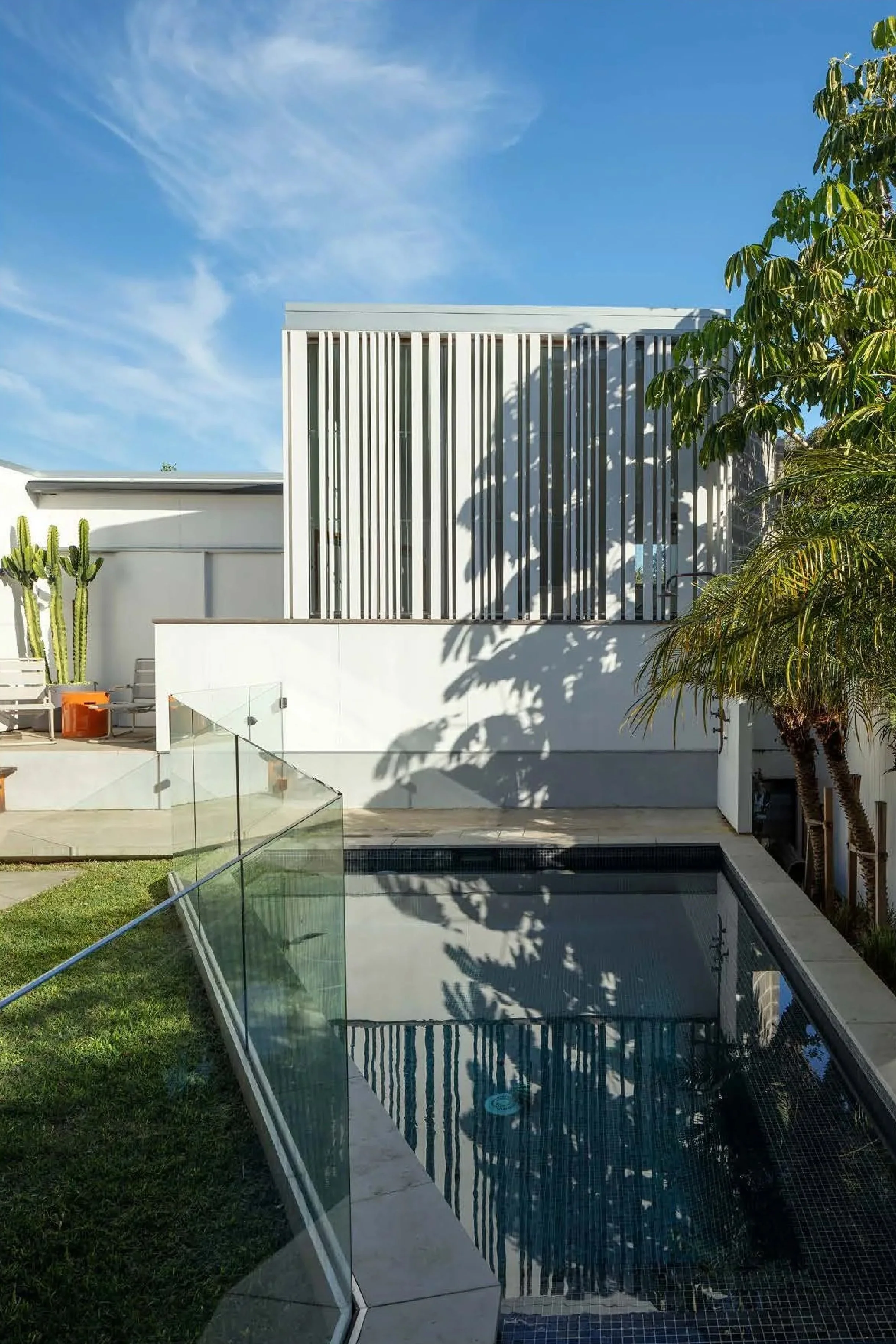
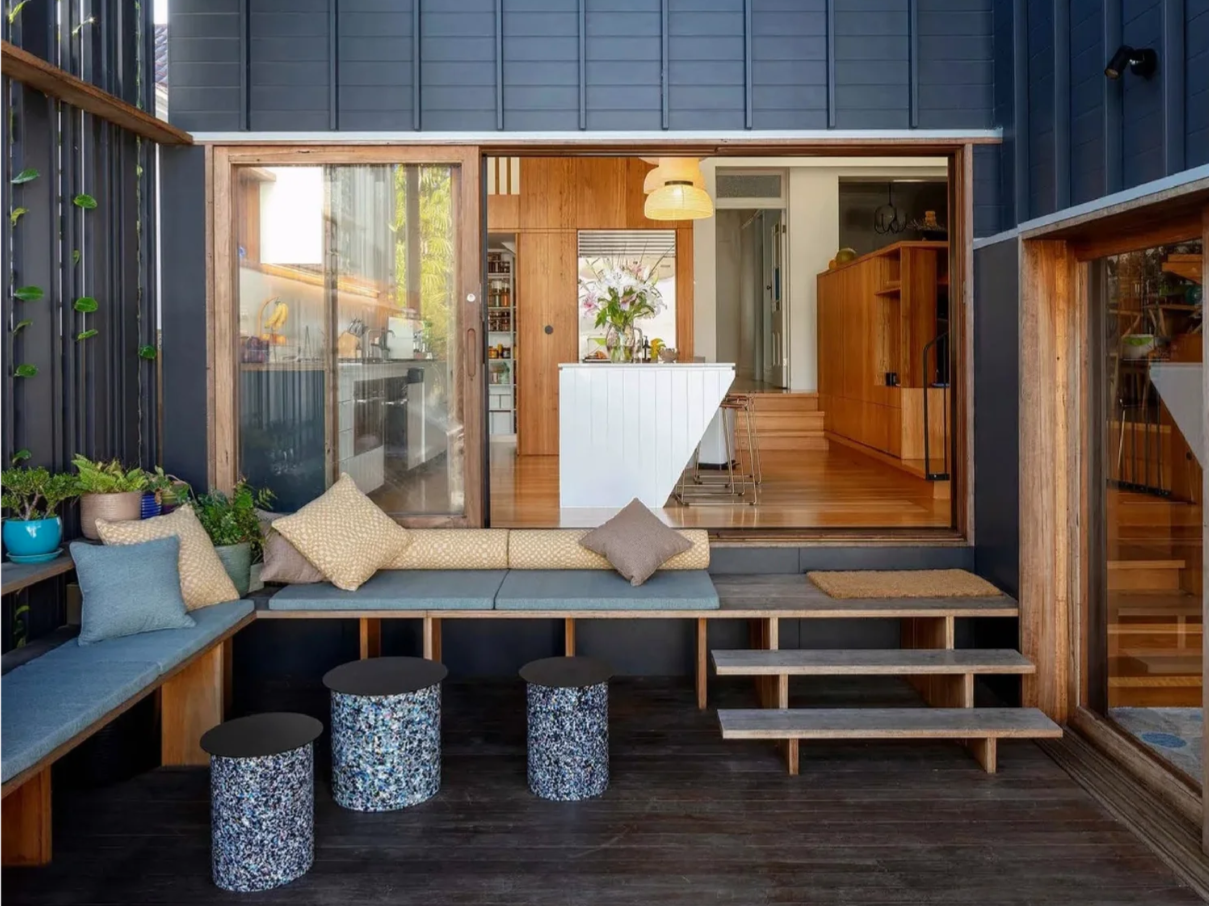
Coogee House began as a modest Californian bungalow, defined by its familiar street presence and traditional scale. The brief required that this original façade be retained, preserving the established character of the streetscape, while the rear of the home was to be reimagined as a contemporary family residence capable of supporting modern living. The challenge lay in creating a clear distinction between old and new without fragmentation. The design sought to allow the bungalow to remain calm and grounded at the front, while introducing a modern extension behind — open, light-filled and highly functional. Responding to the site’s slope was central to the brief, with the ambition to integrate living, garage and utility spaces in a way that felt deliberate, resolved and cohesive rather than layered by necessity.
Construction & Craftsmanship
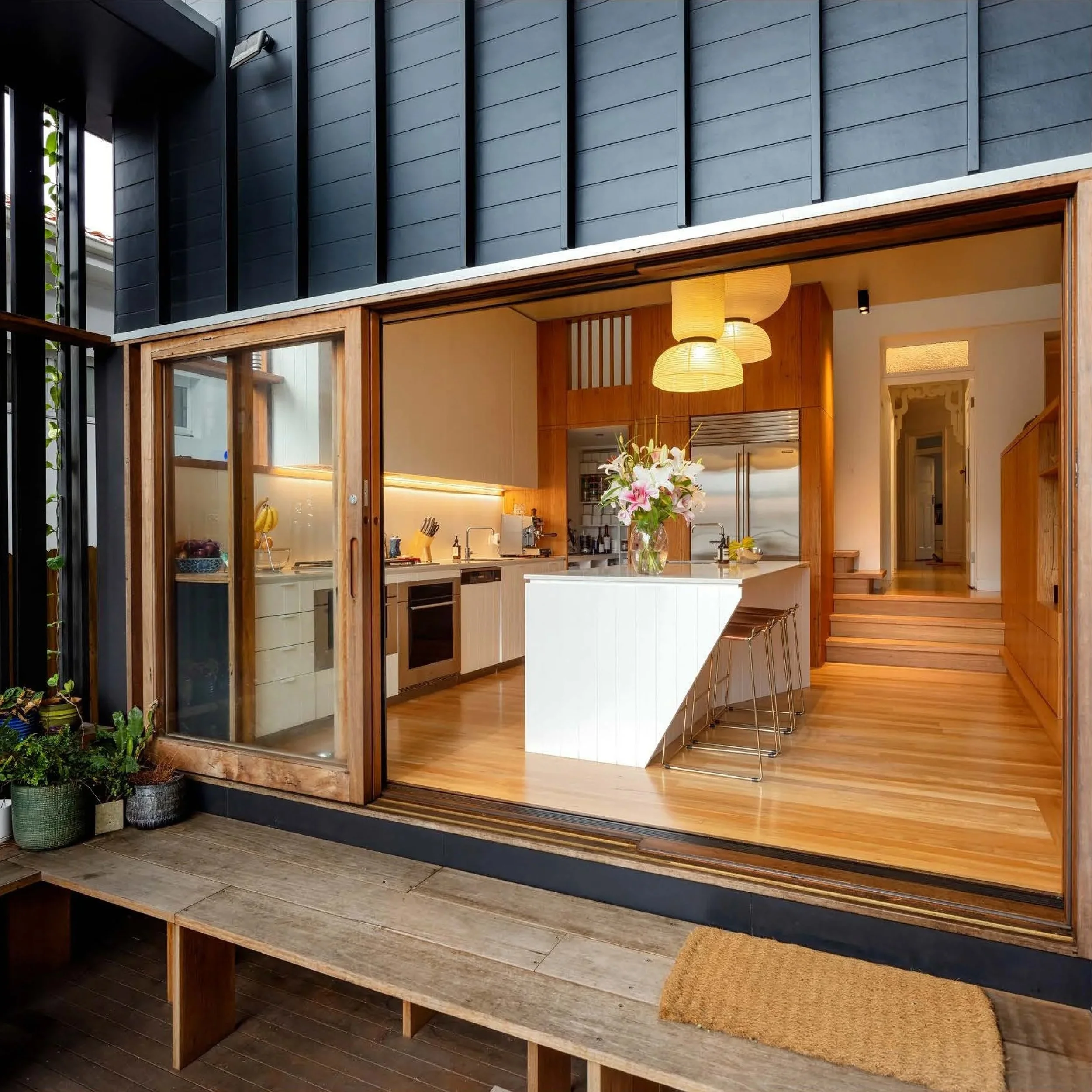
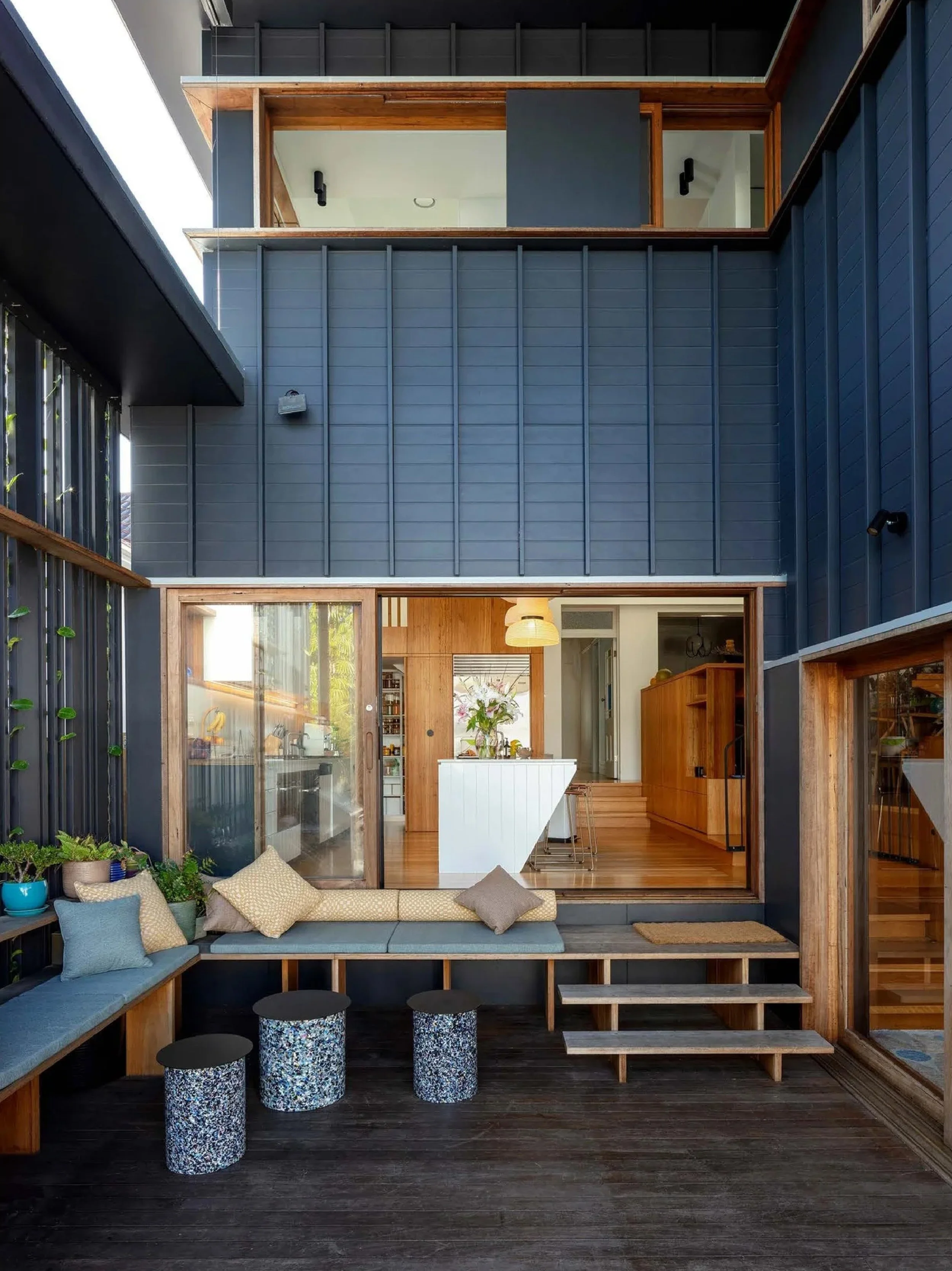
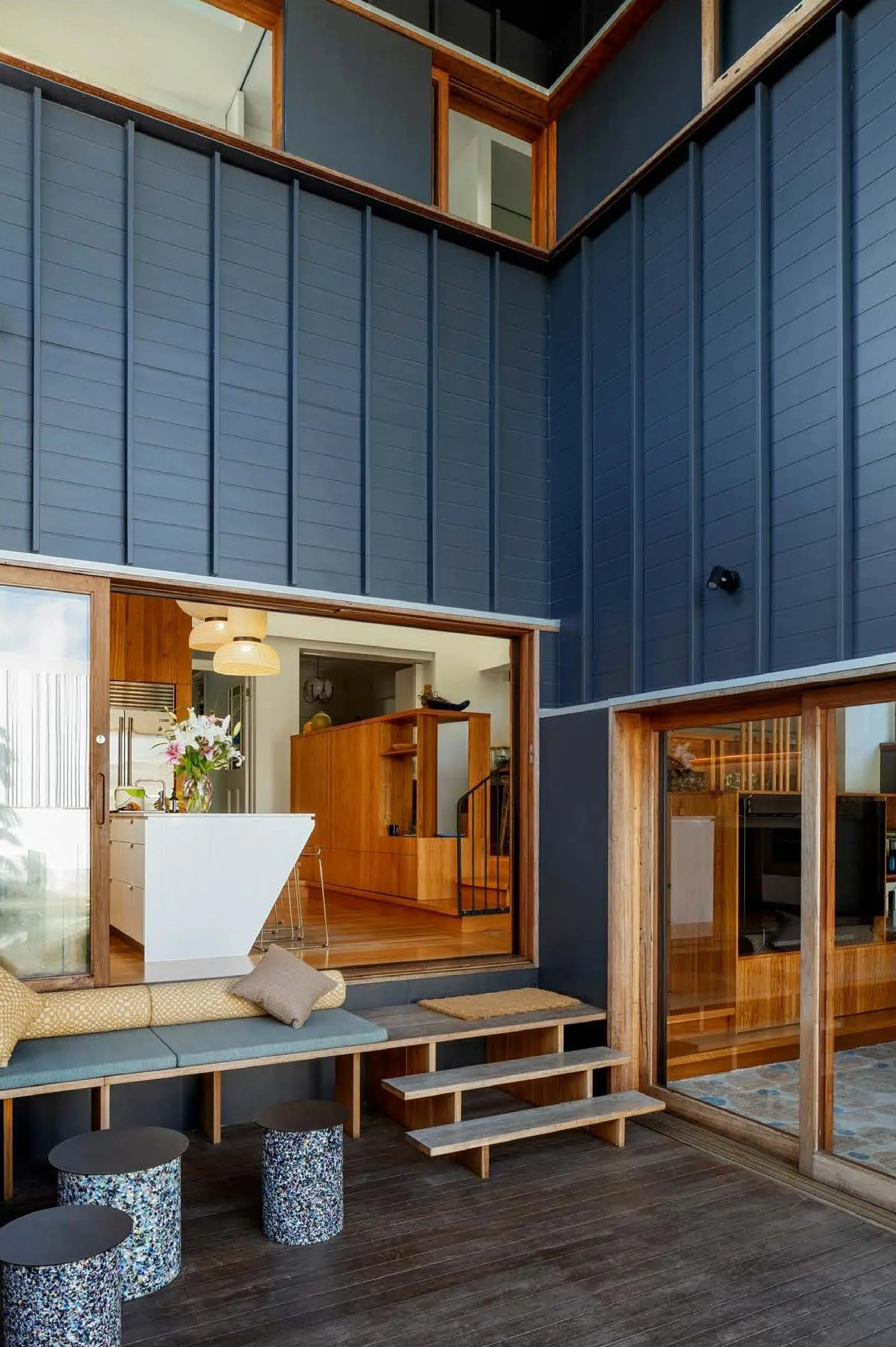
Realising this transformation required careful sequencing and a highly considered construction strategy. The extension was formed as a lightweight timber structure, intentionally contrasting with the solidity of the original bungalow while maintaining harmony through proportion, alignment and material continuity.
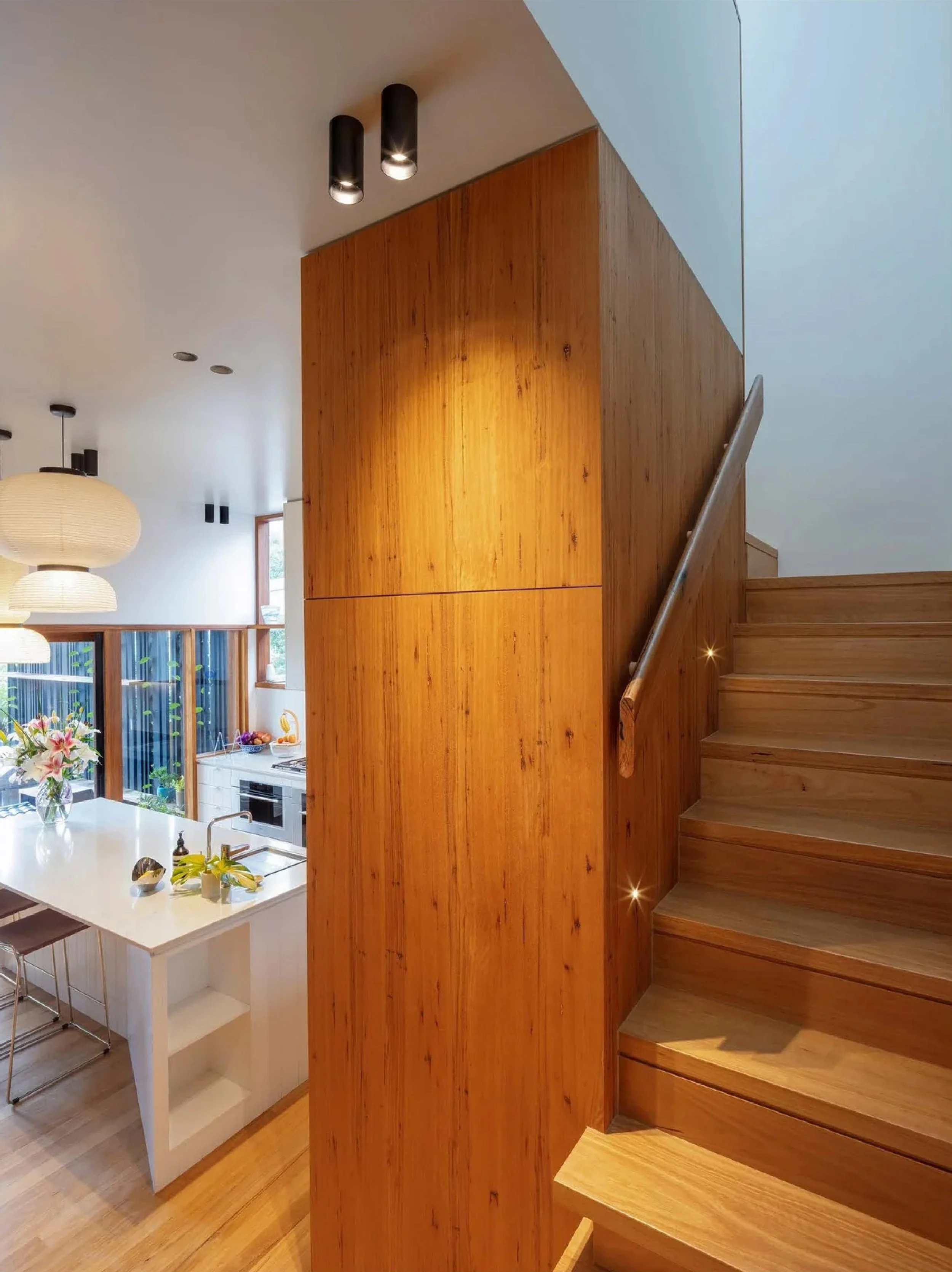
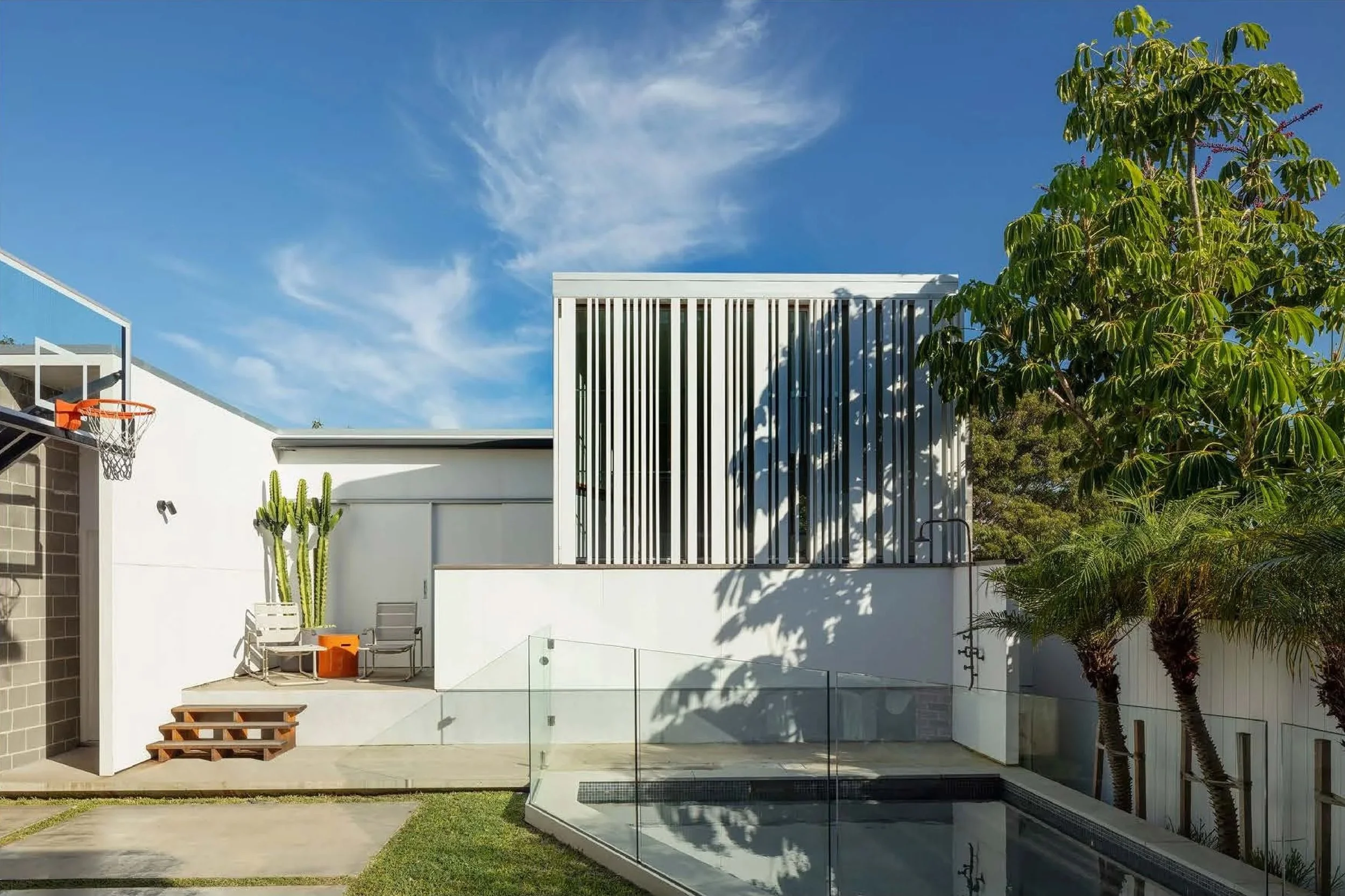
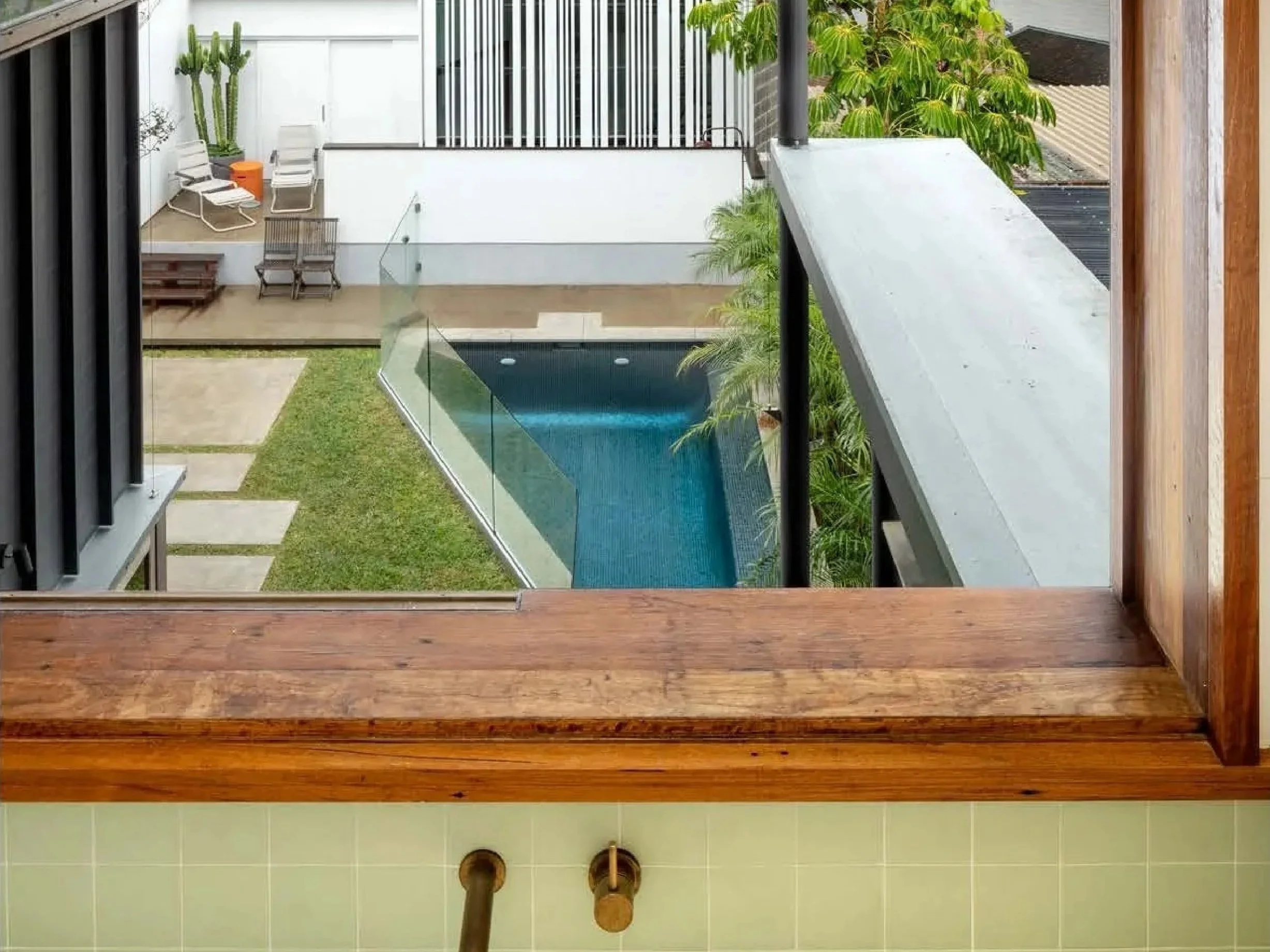
To address the sloping site, a concrete garage was excavated below garden level — a technically complex intervention that allowed service spaces to be absorbed discreetly into the landscape. Above the garage, a playroom and office were positioned to connect directly with the rear living areas, resolving changes in level through precise structural coordination rather than visual compromise.
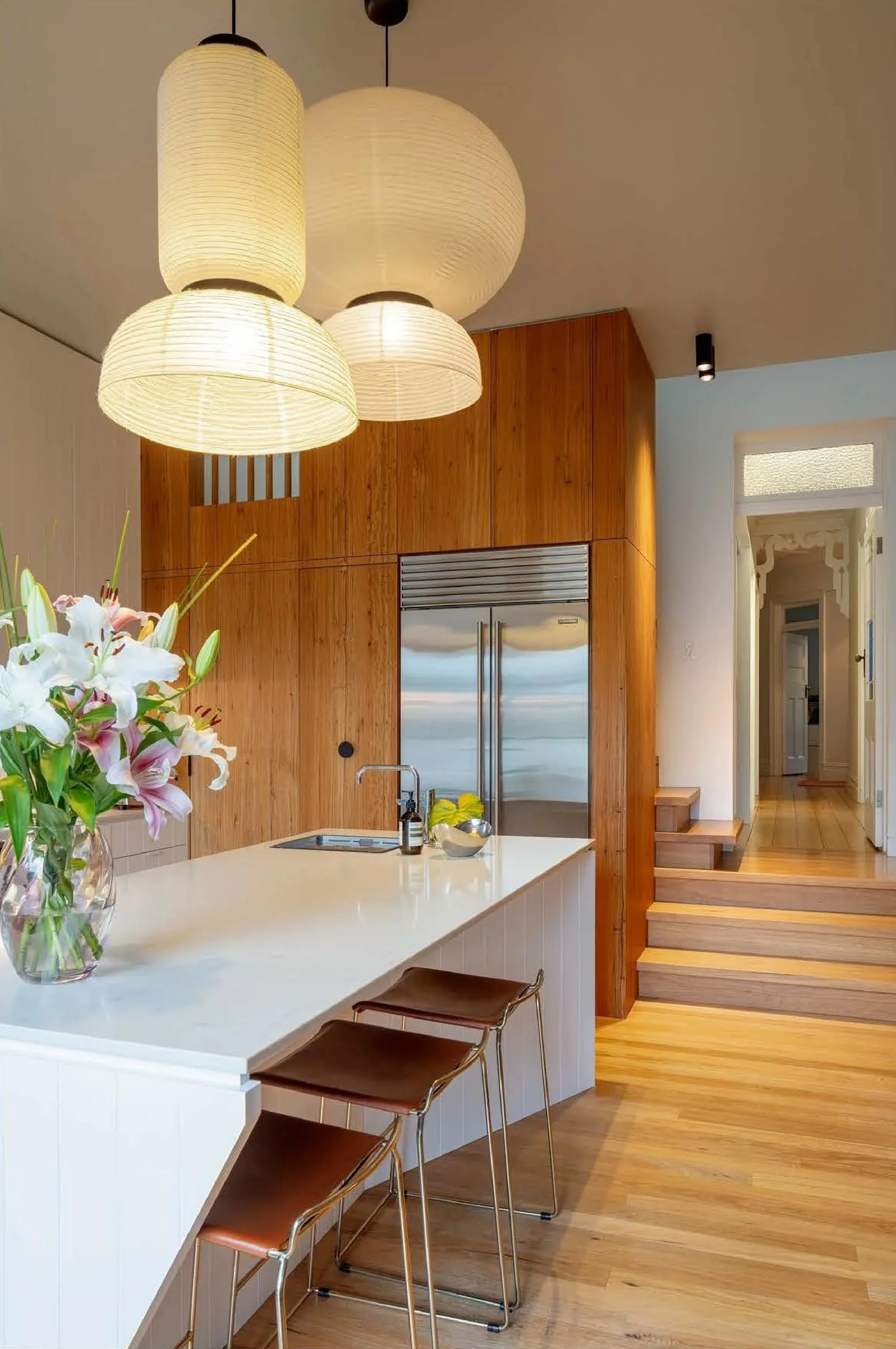
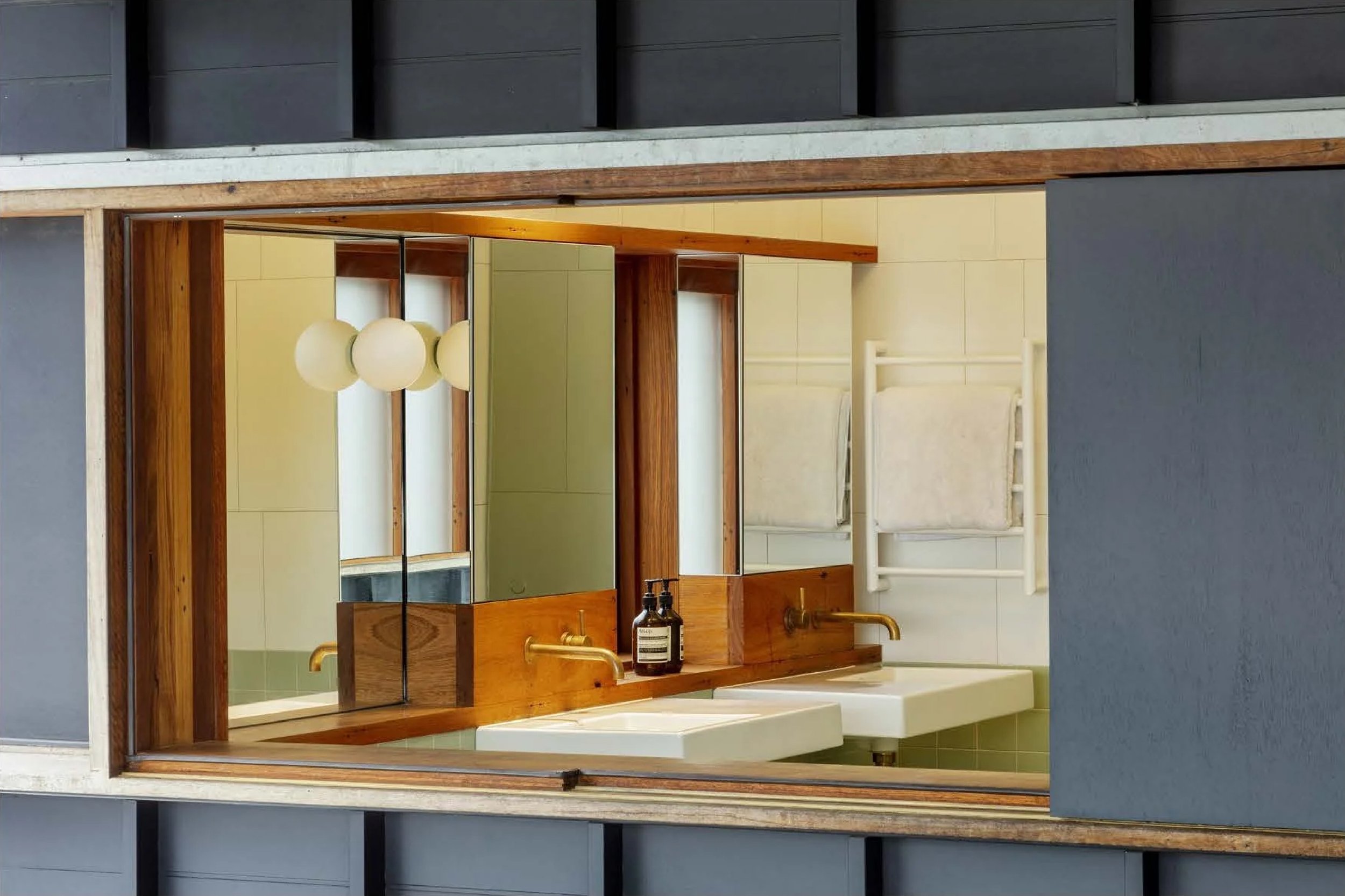
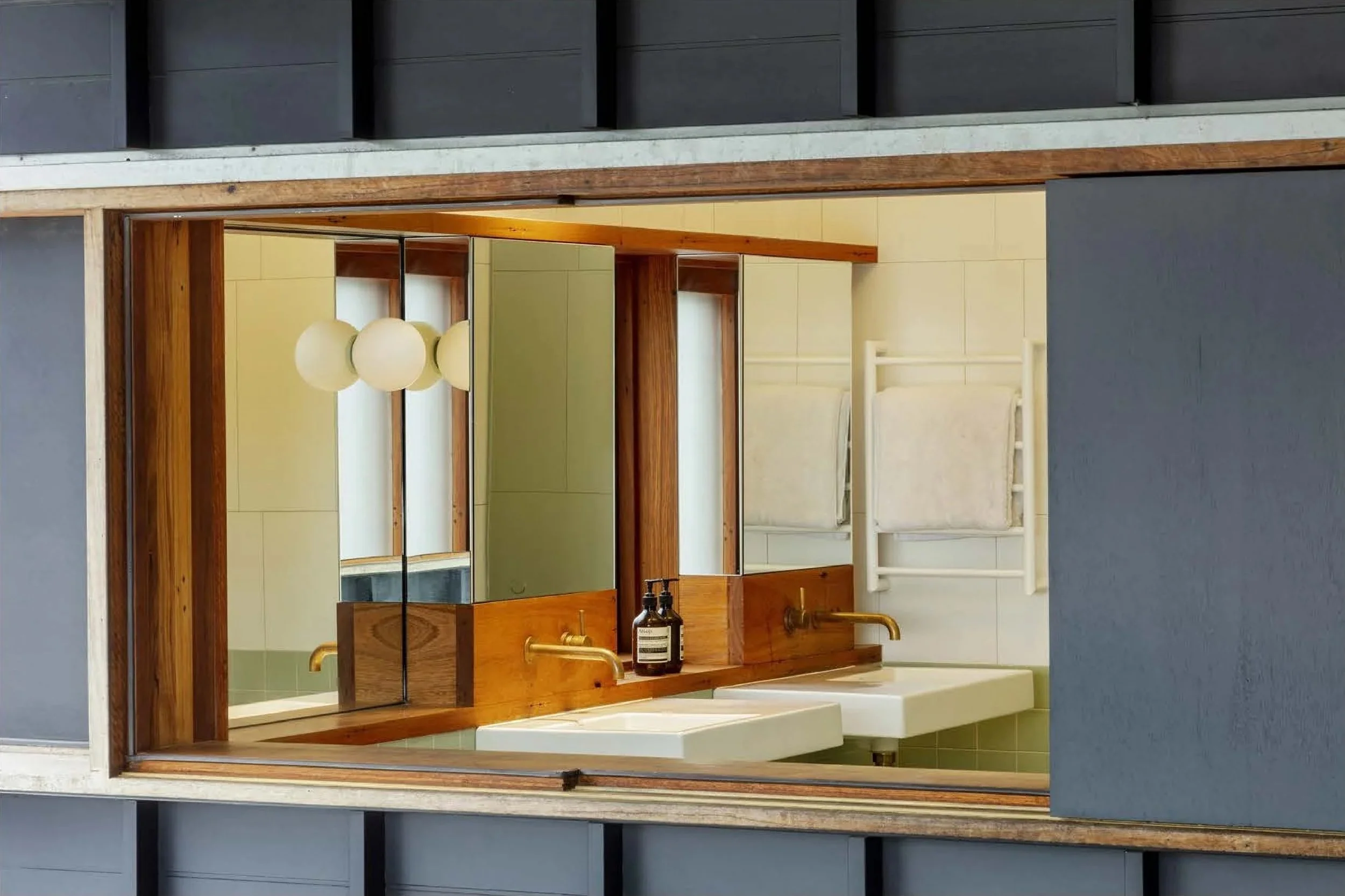
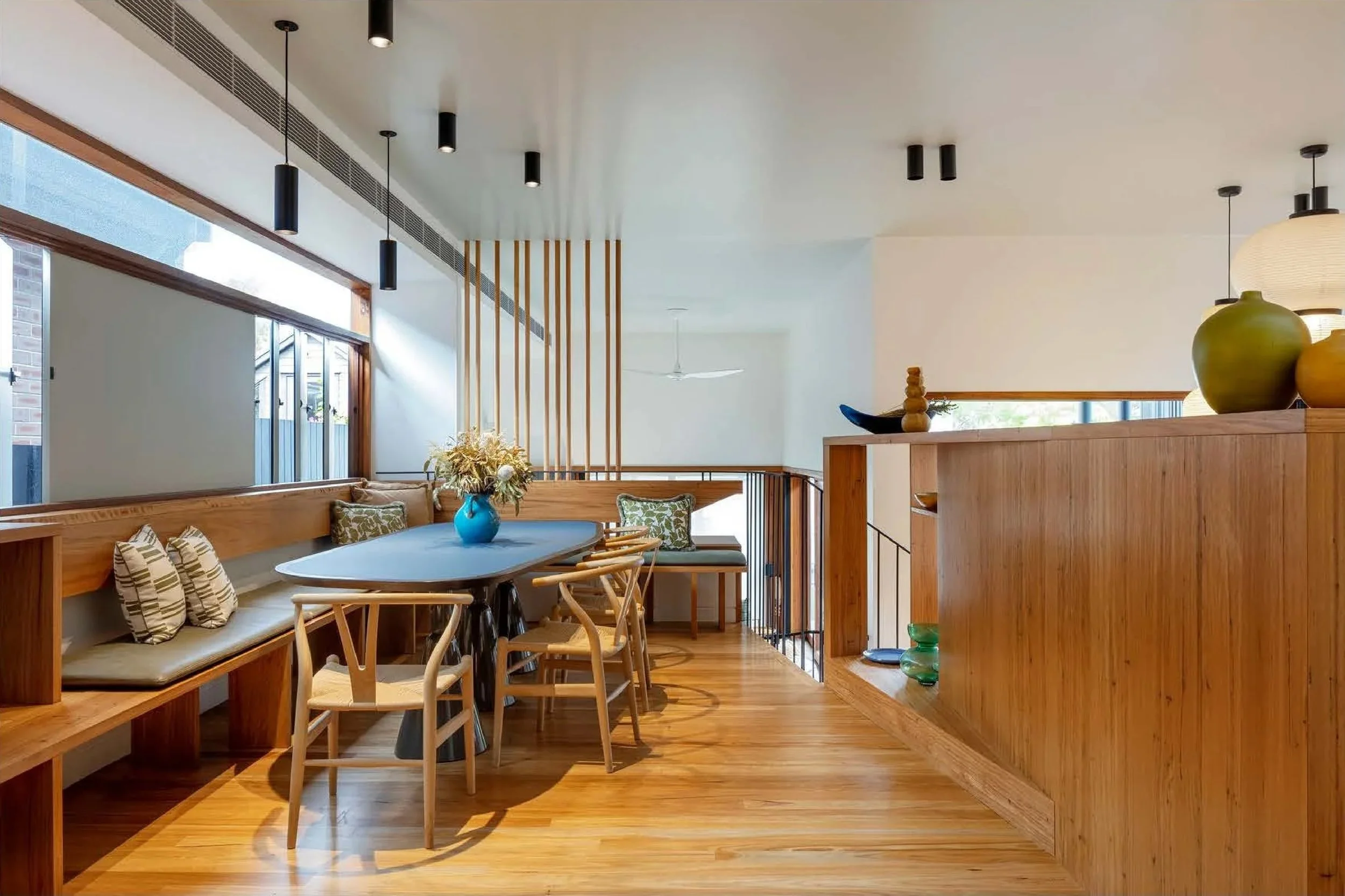
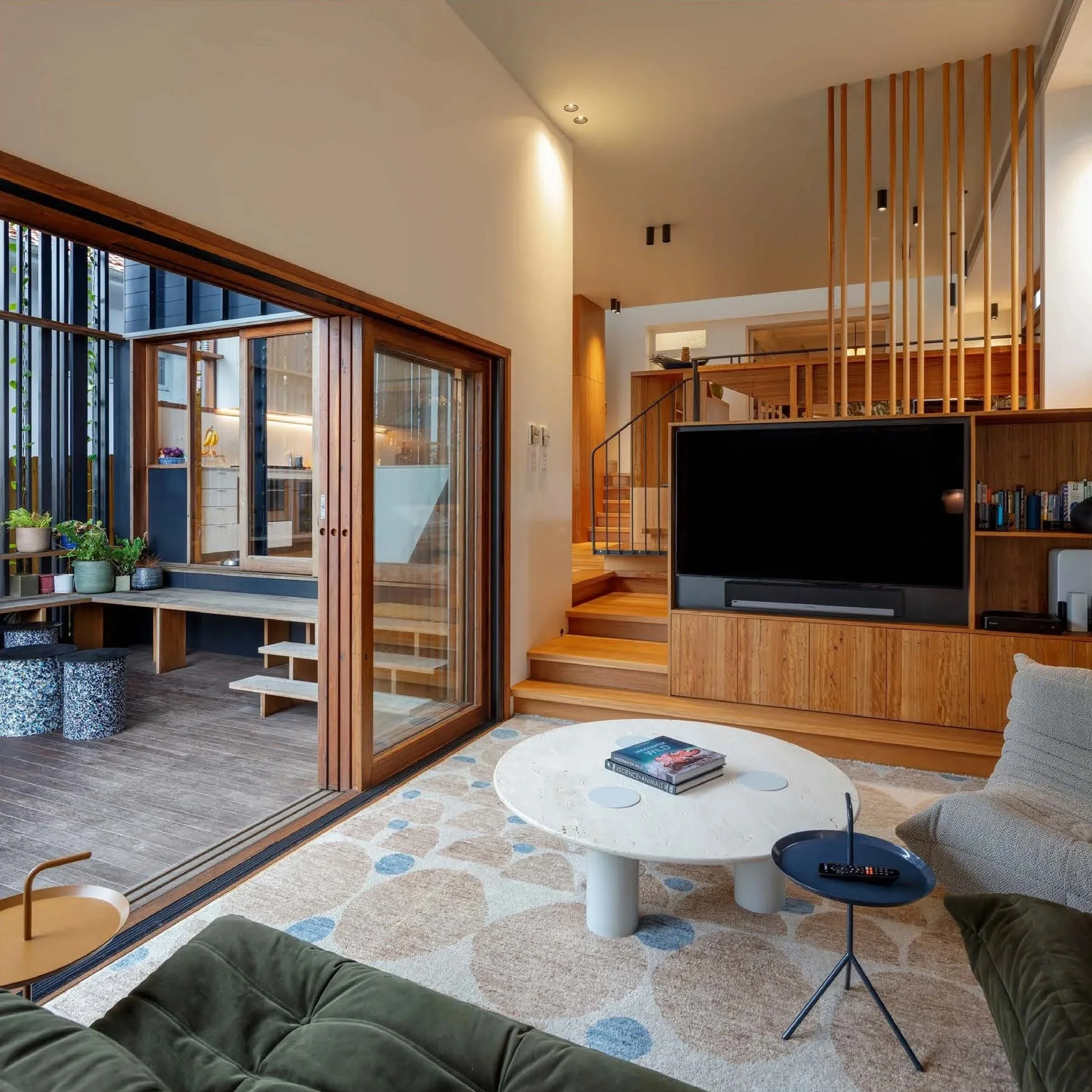
Recycled timber plays a defining role throughout the project, used extensively in bespoke joinery, custom furniture and external cladding battens. This approach introduces warmth and tactility while showcasing a high level of carpentry craftsmanship. External doors, windows and joinery were executed to exacting standards, ensuring durability, alignment and a seamless relationship between the original structure and the new extension.
Material Palette
The material strategy reinforces the dialogue between heritage and contemporary living:
→Recycled Timber: Used across joinery, furniture and cladding battens, introducing warmth, texture and a strong sense of material integrity.
→Concrete & Blockwork: Forming the below-ground garage structure, providing solidity and anchoring the home to the site.
→Lightweight Timber Structure: Selected for the extension to allow openness, flexibility and contrast with the original bungalow.
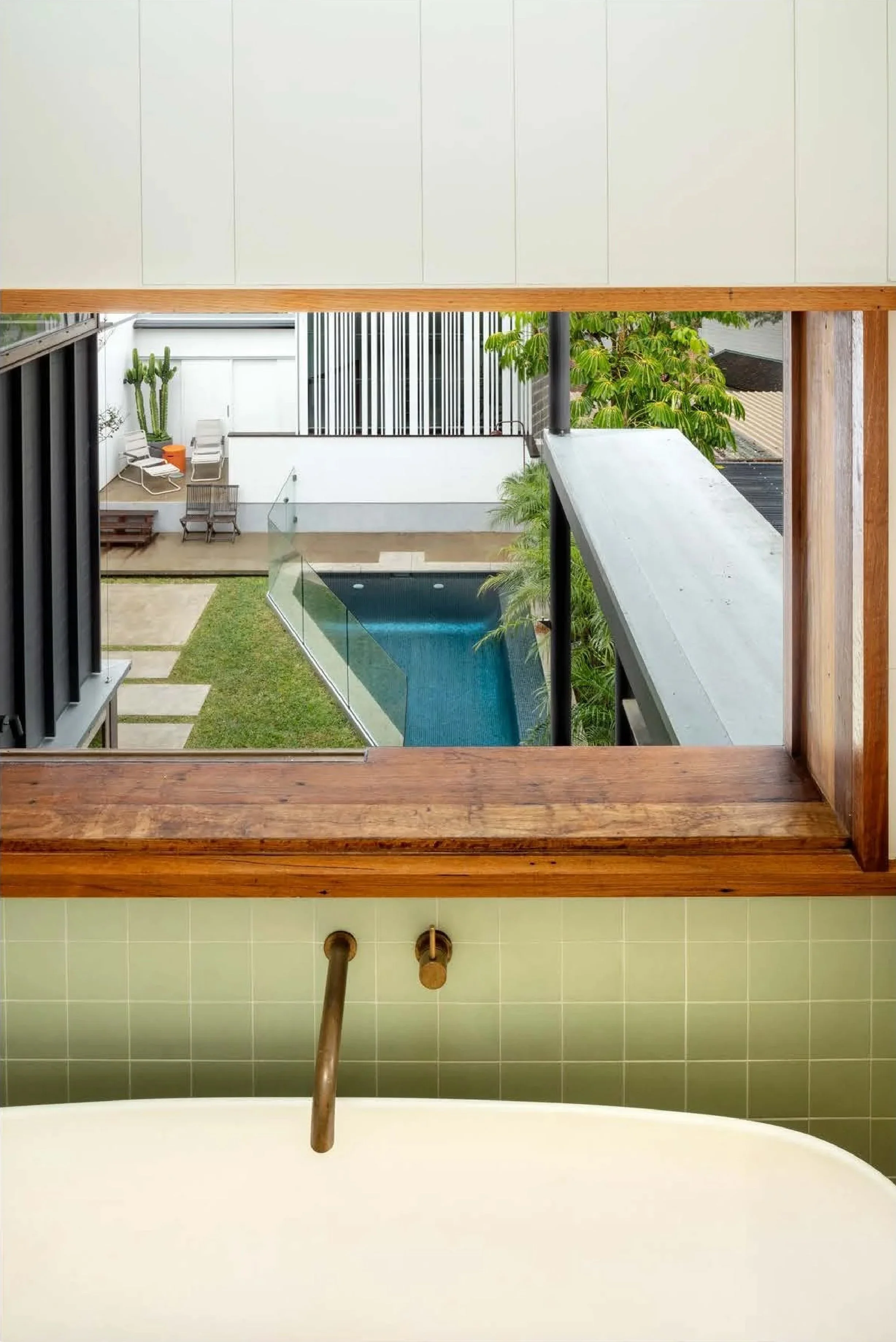
→Glass & Glazing: Integrated throughout the rear living spaces to maximise natural light and strengthen the connection between interior and garden.
Together, these materials create a composition that is robust yet refined — grounded in construction logic while remaining visually cohesive.
Outcome
Coogee House is a measured and thoughtful transformation — one that respects the character of the original bungalow while introducing a contemporary family environment behind. What was once a compact dwelling has evolved into a cohesive, highly functional home, where heritage calm at the street gives way to open, light-filled living at the rear.
By excavating into the site and carefully layering new spaces above and below garden level, the project achieves a balance between practicality and architectural clarity. Recycled timber warmth, structural resolution and bespoke detailing ensure the extension reads as intentional and enduring — not an addition, but a considered evolution of the home.