ROSEVILLE HOUSE, 2020
-
-
Item description
-
-
-
-
-
Project Brief & Design Intent
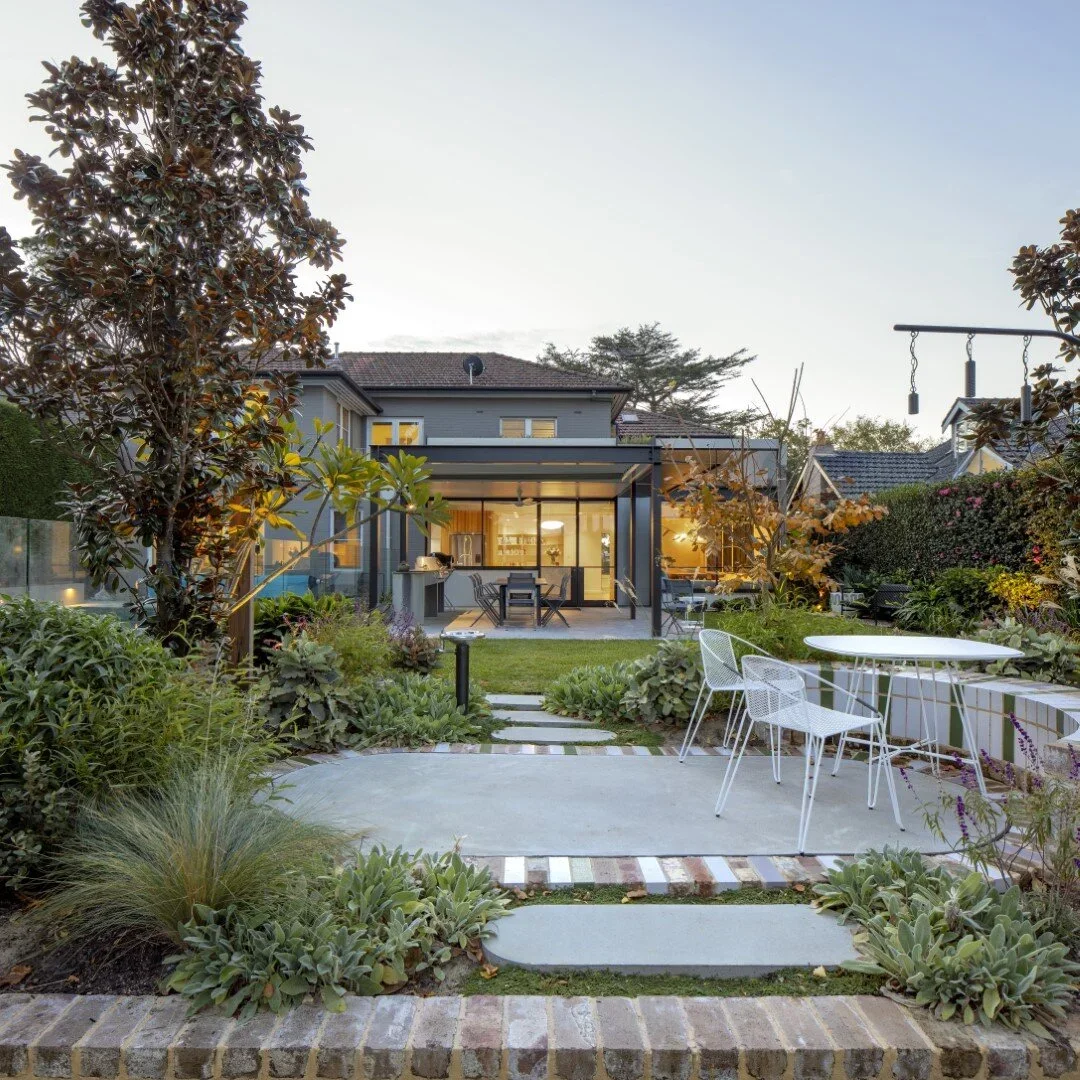
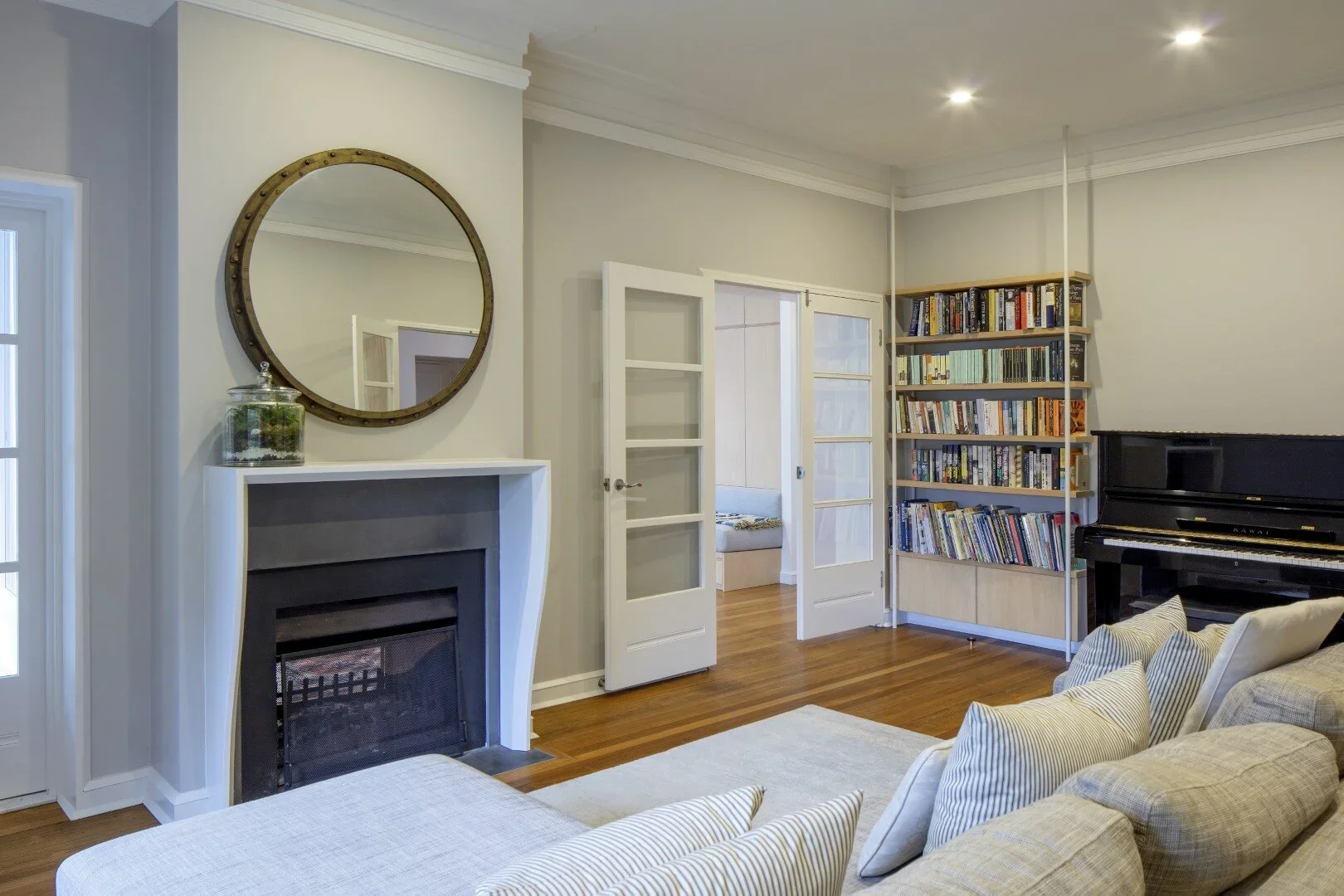
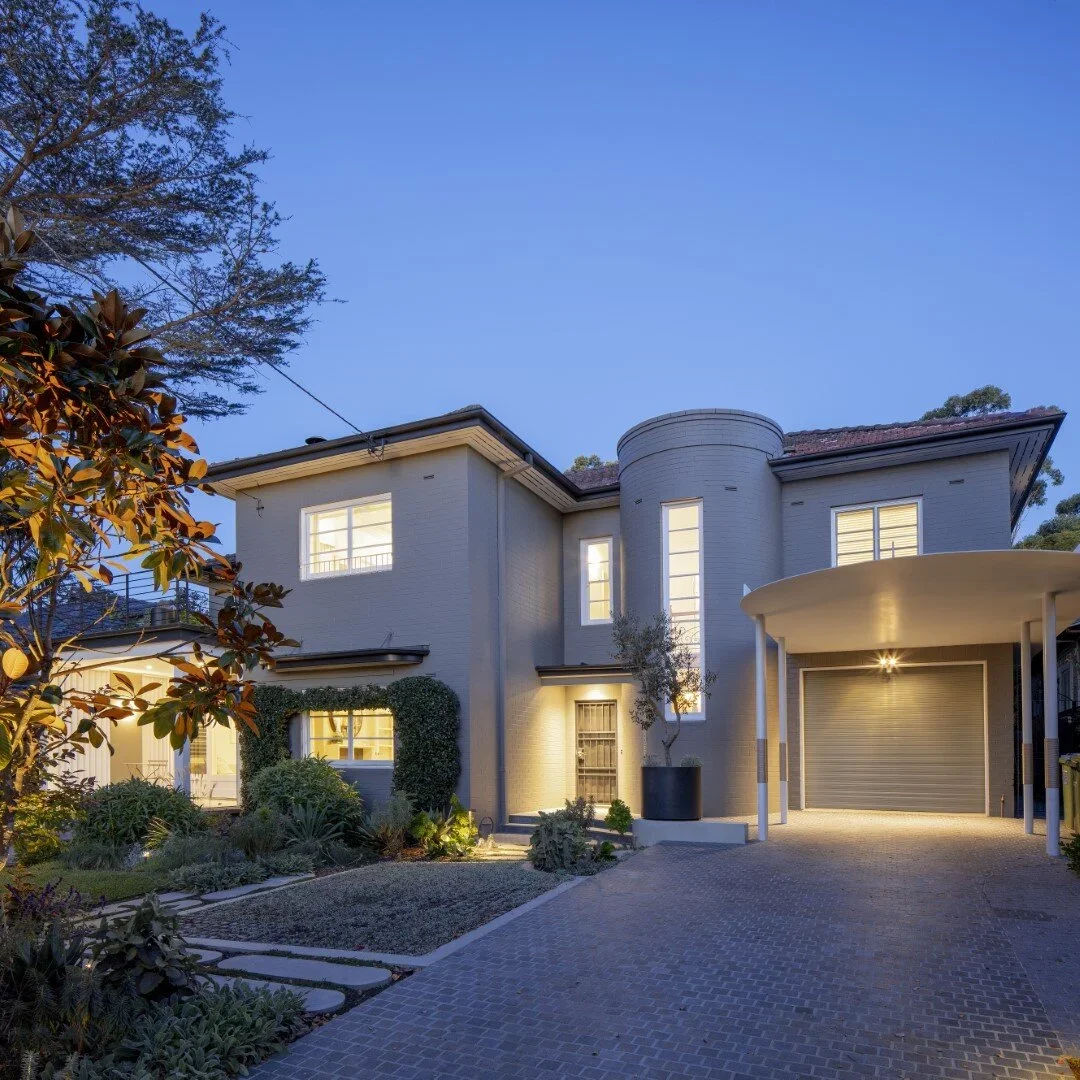
Roseville House began as a still-liveable Arts and Crafts residence on a large Upper North Shore site. The brief was to improve comfort for a growing family while retaining the character of the original home. Rather than replacing the house entirely, the project introduced targeted interventions to enhance spatial quality and liveability.
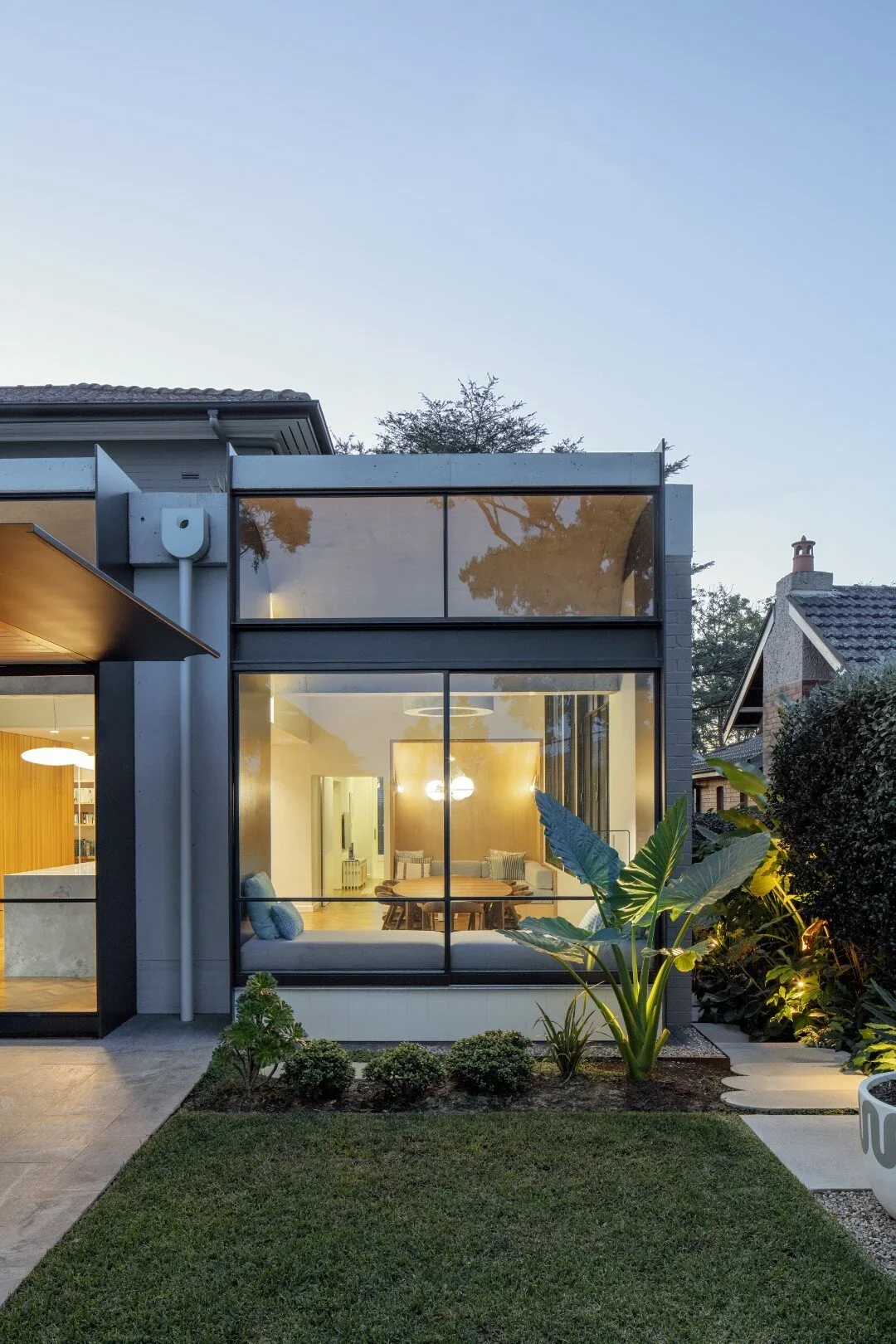
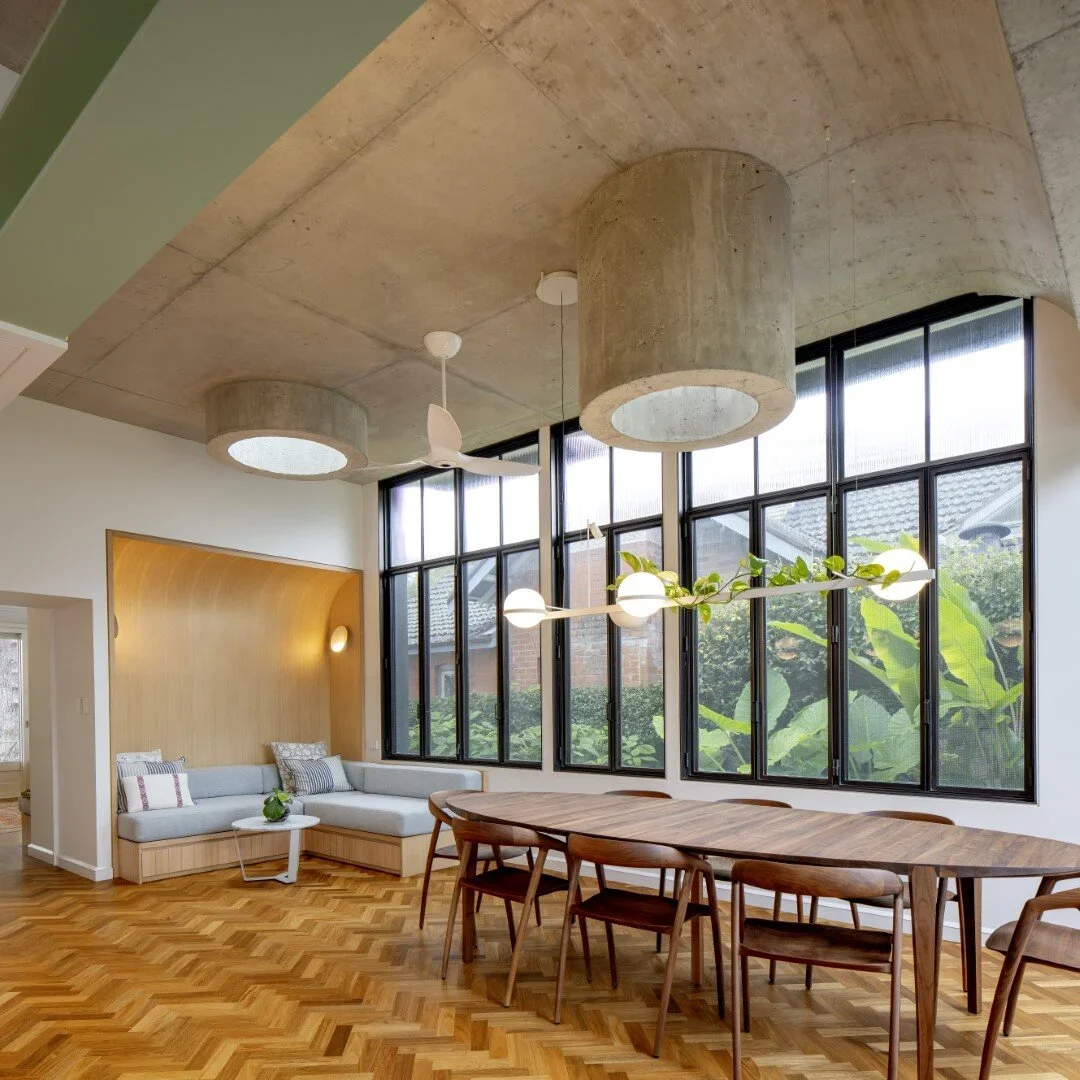
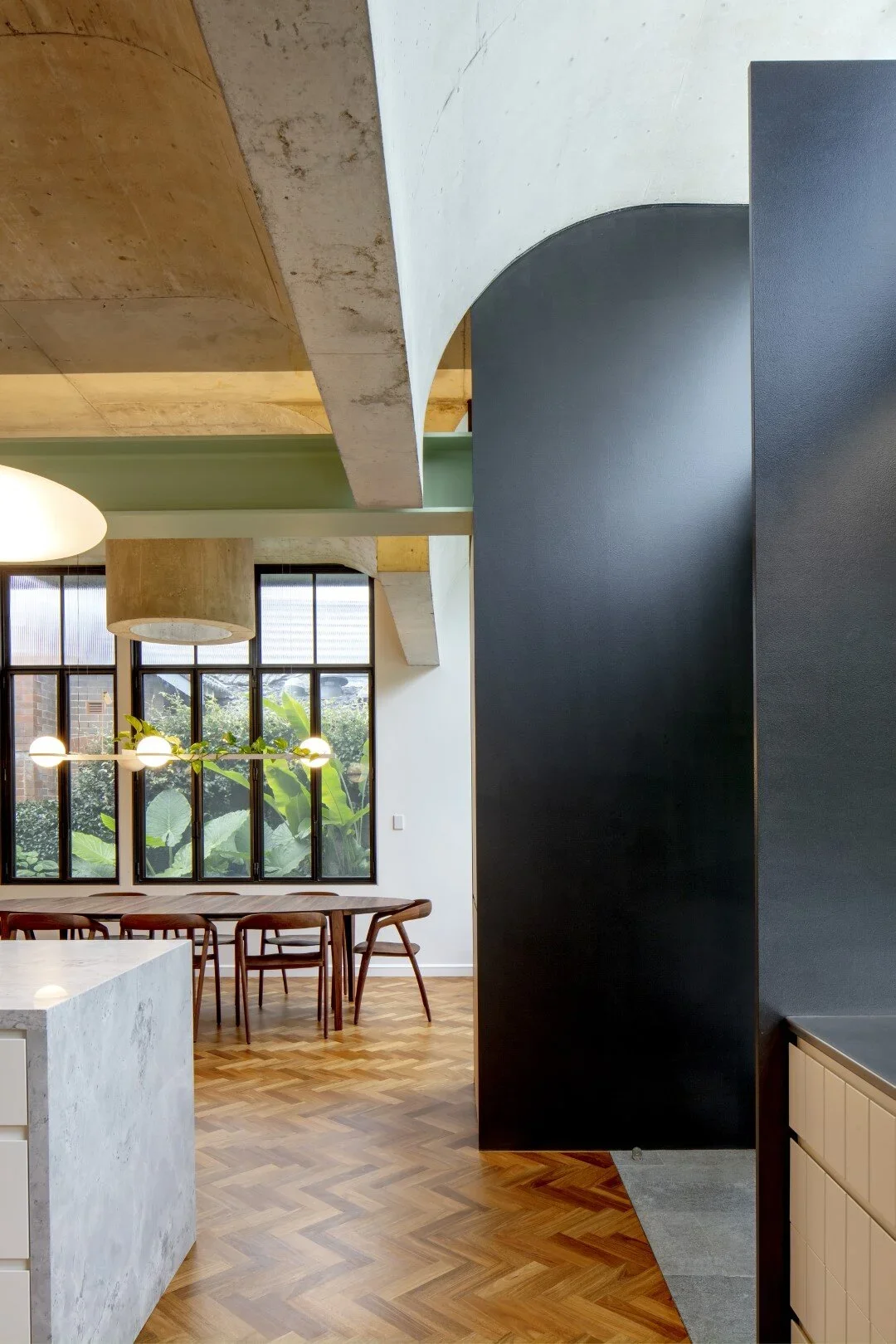
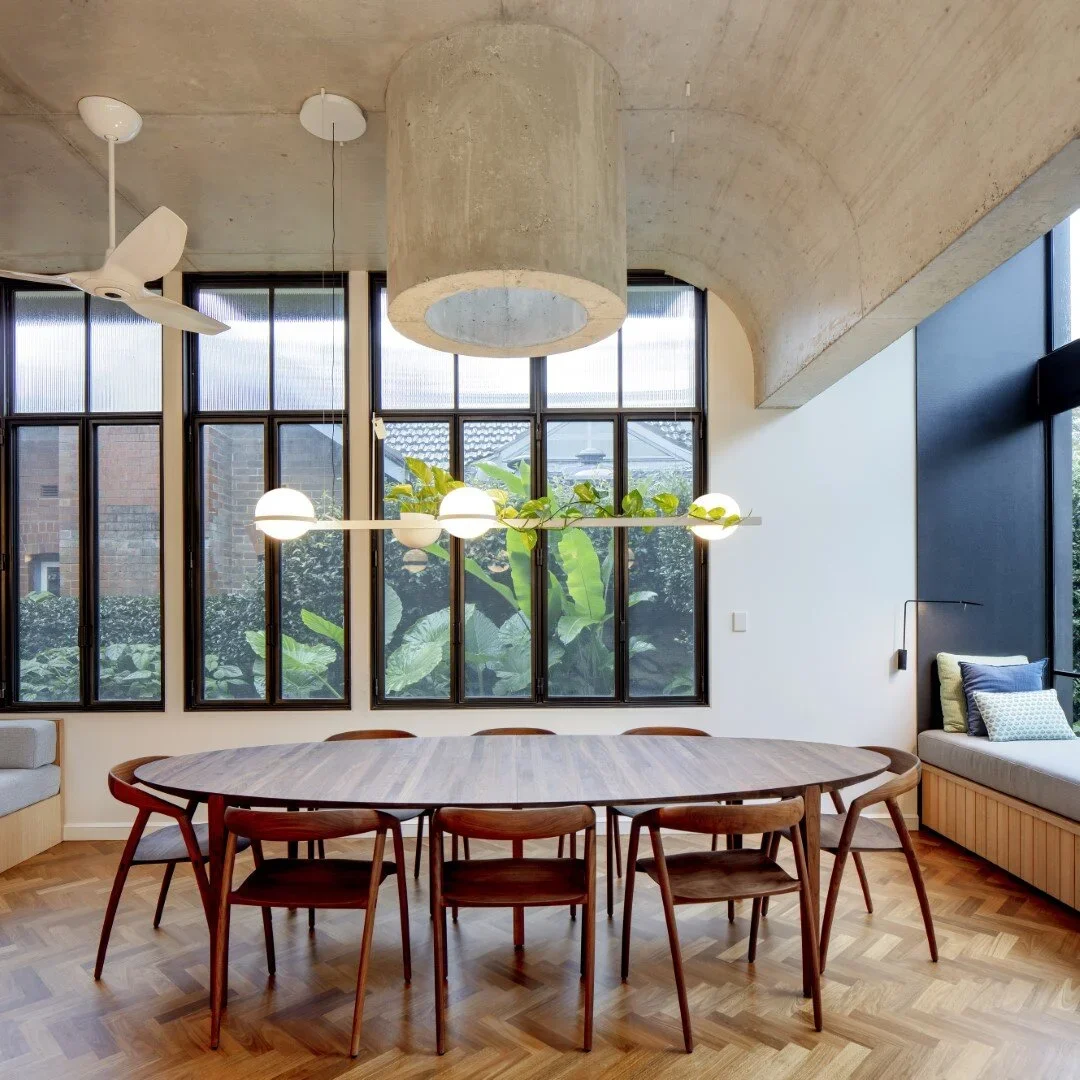
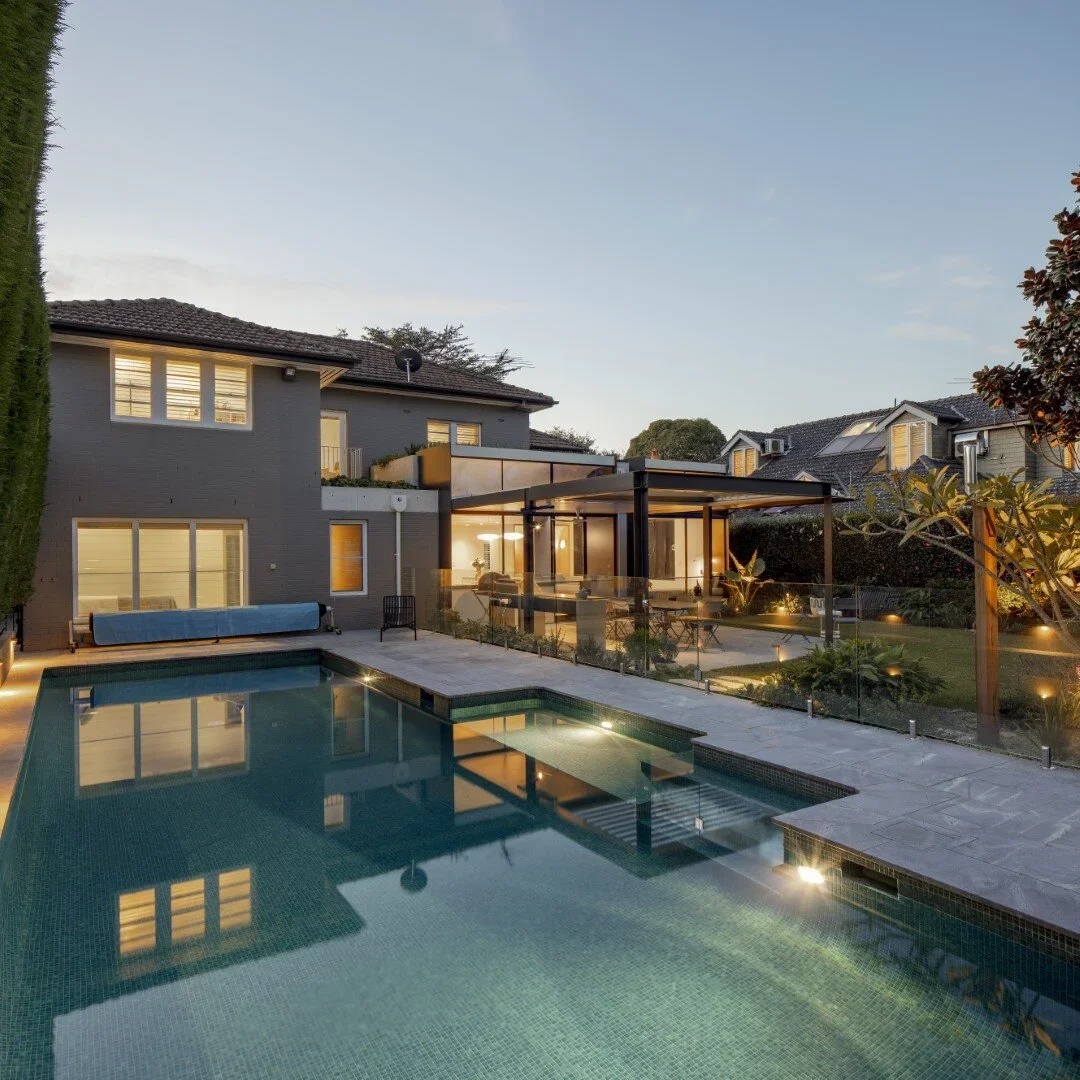
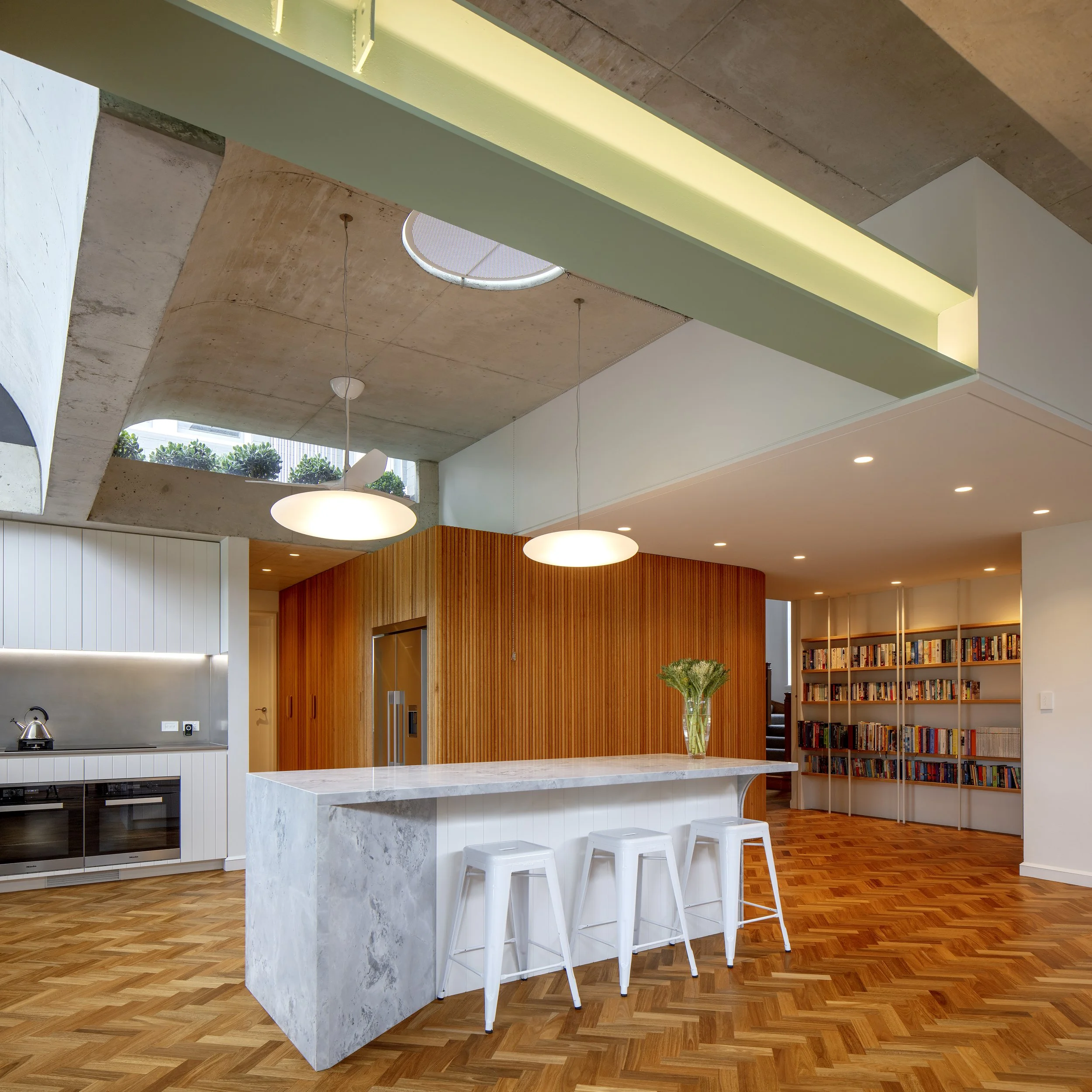
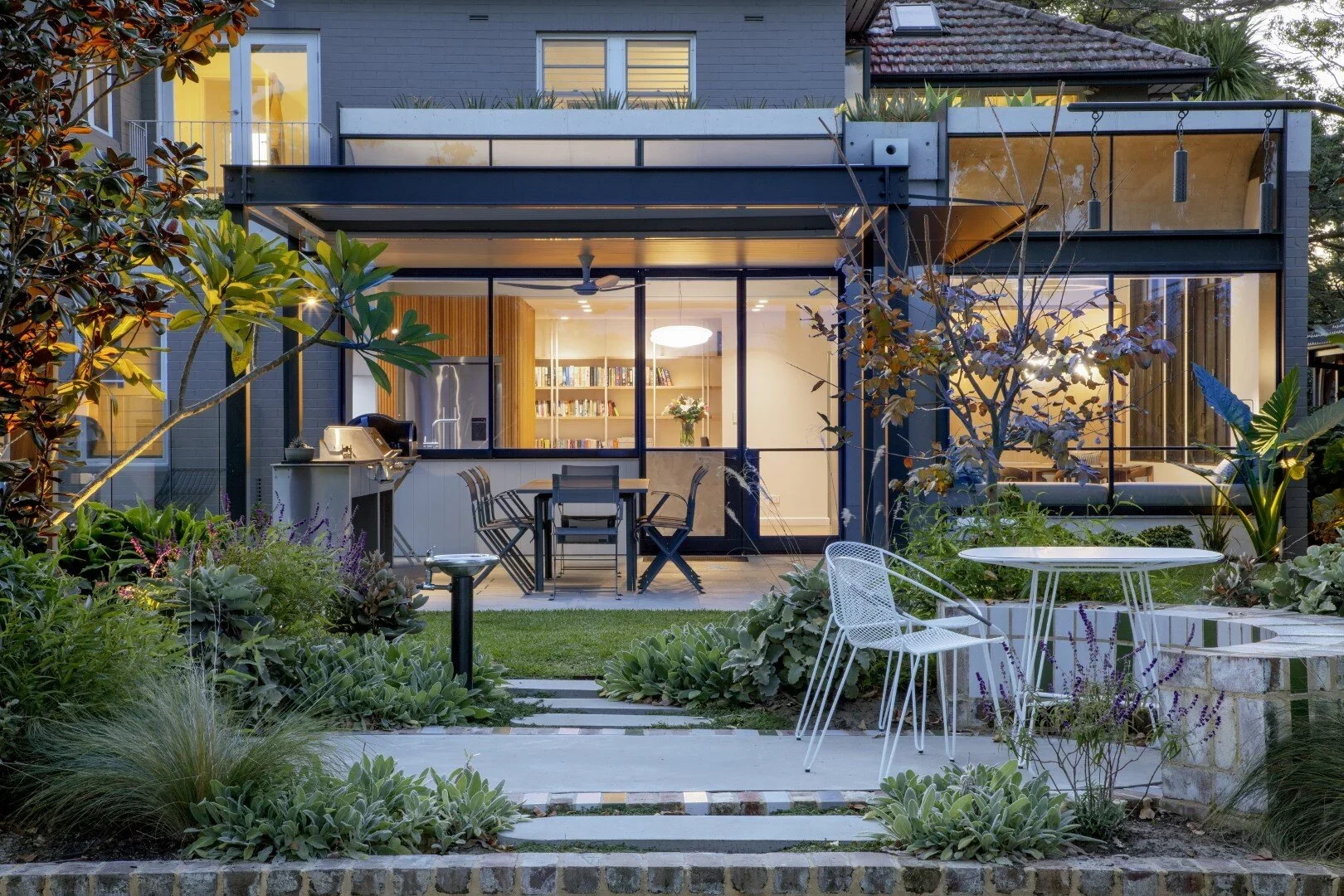
A steel-clad cantilevered carport signals a shift in architectural language at the front, while the removal of the rear living area allowed for a contemporary extension. Anchored to the existing structure, a new concrete volume — articulated with sculptural skylights and a glass wall — forms a modern counterpoint, organising light and movement through the home with clarity and intent.
Construction & Craftsmanship
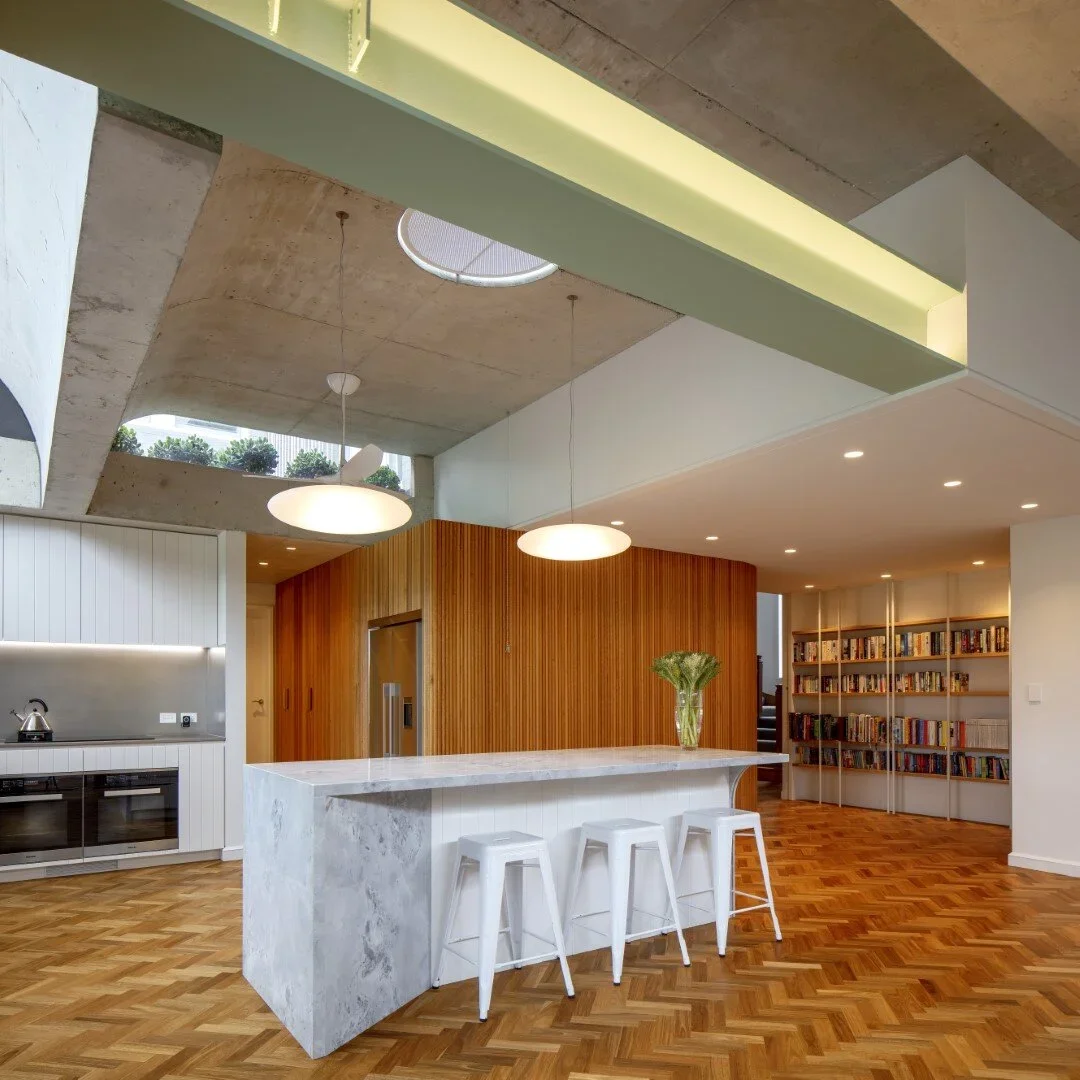
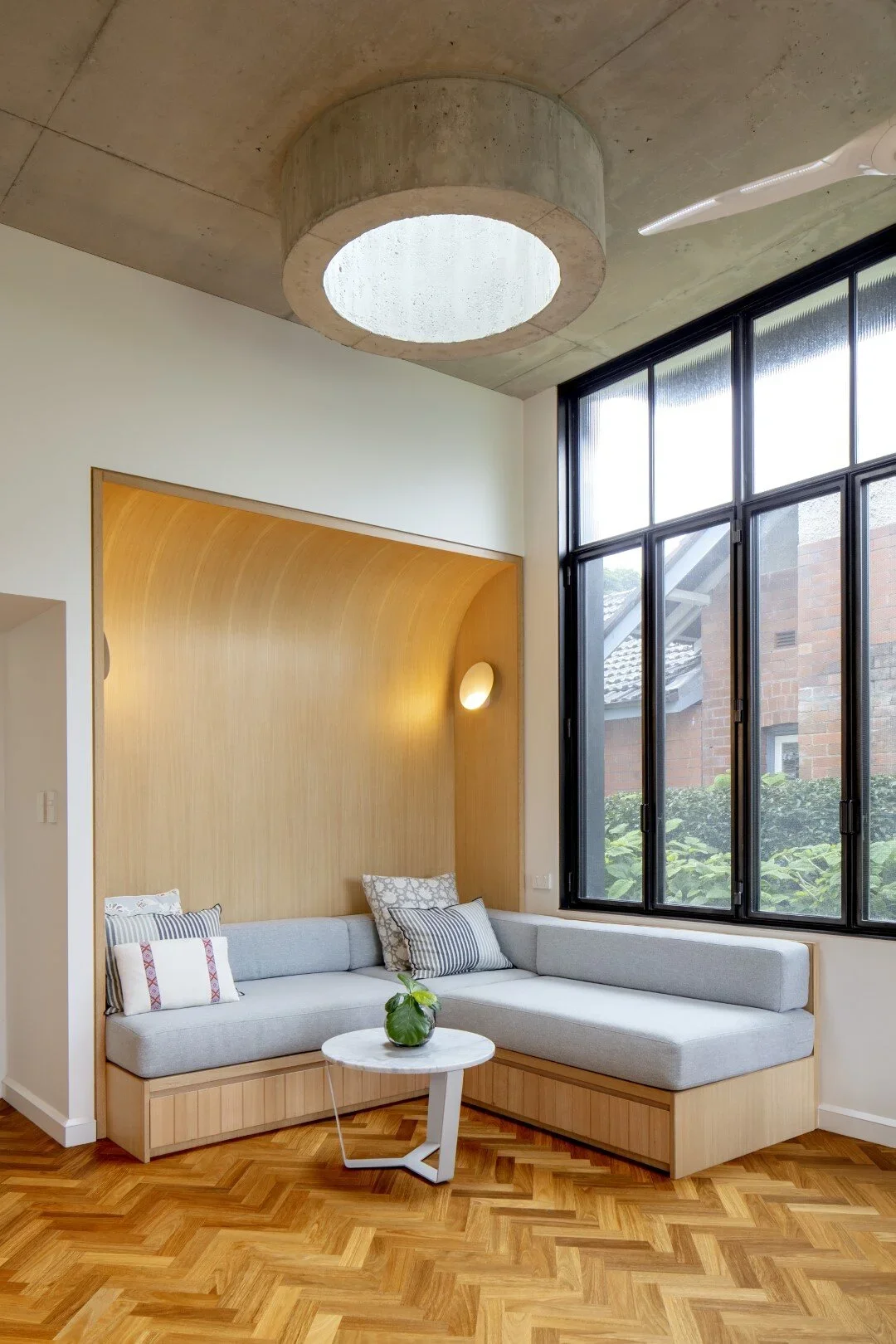
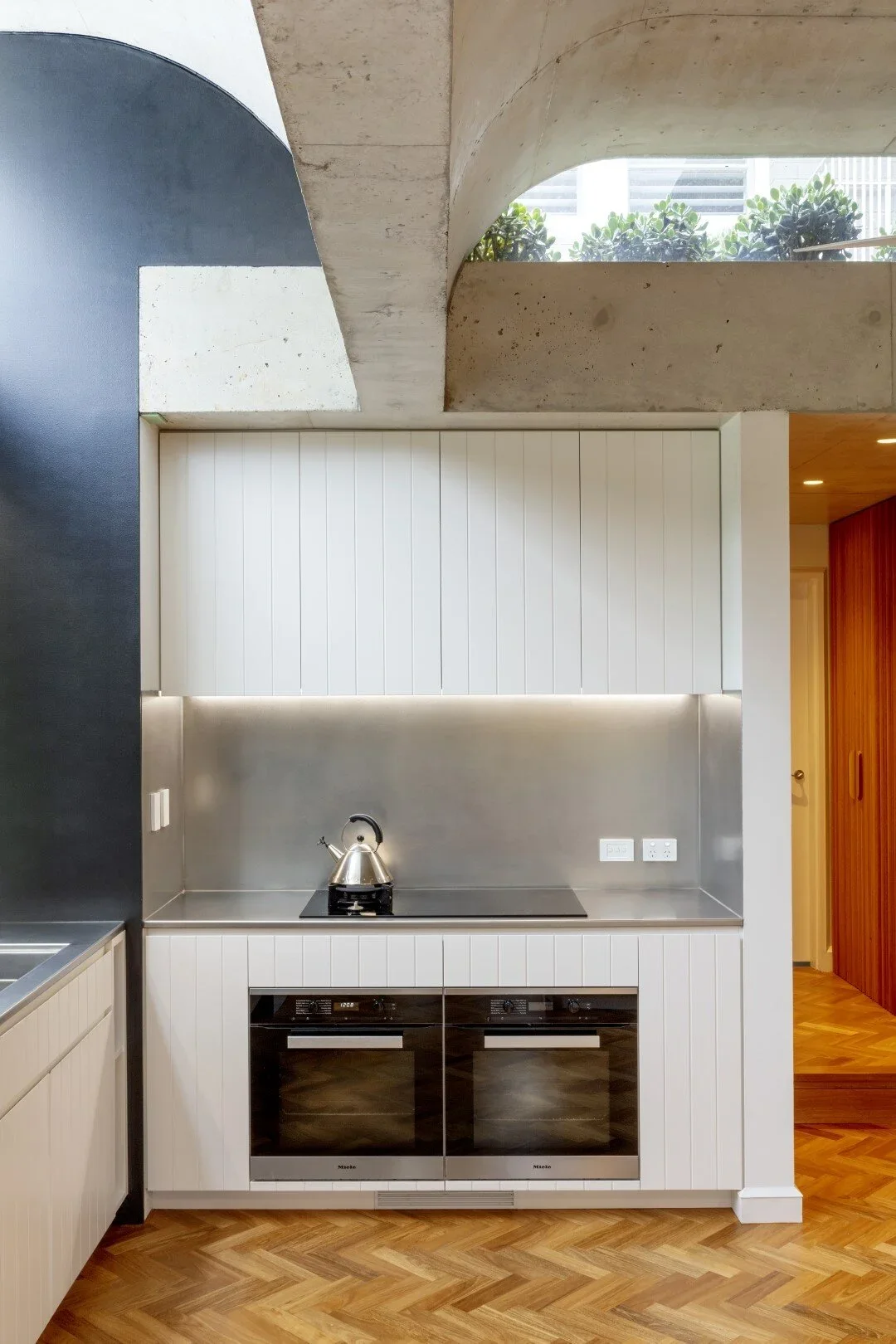
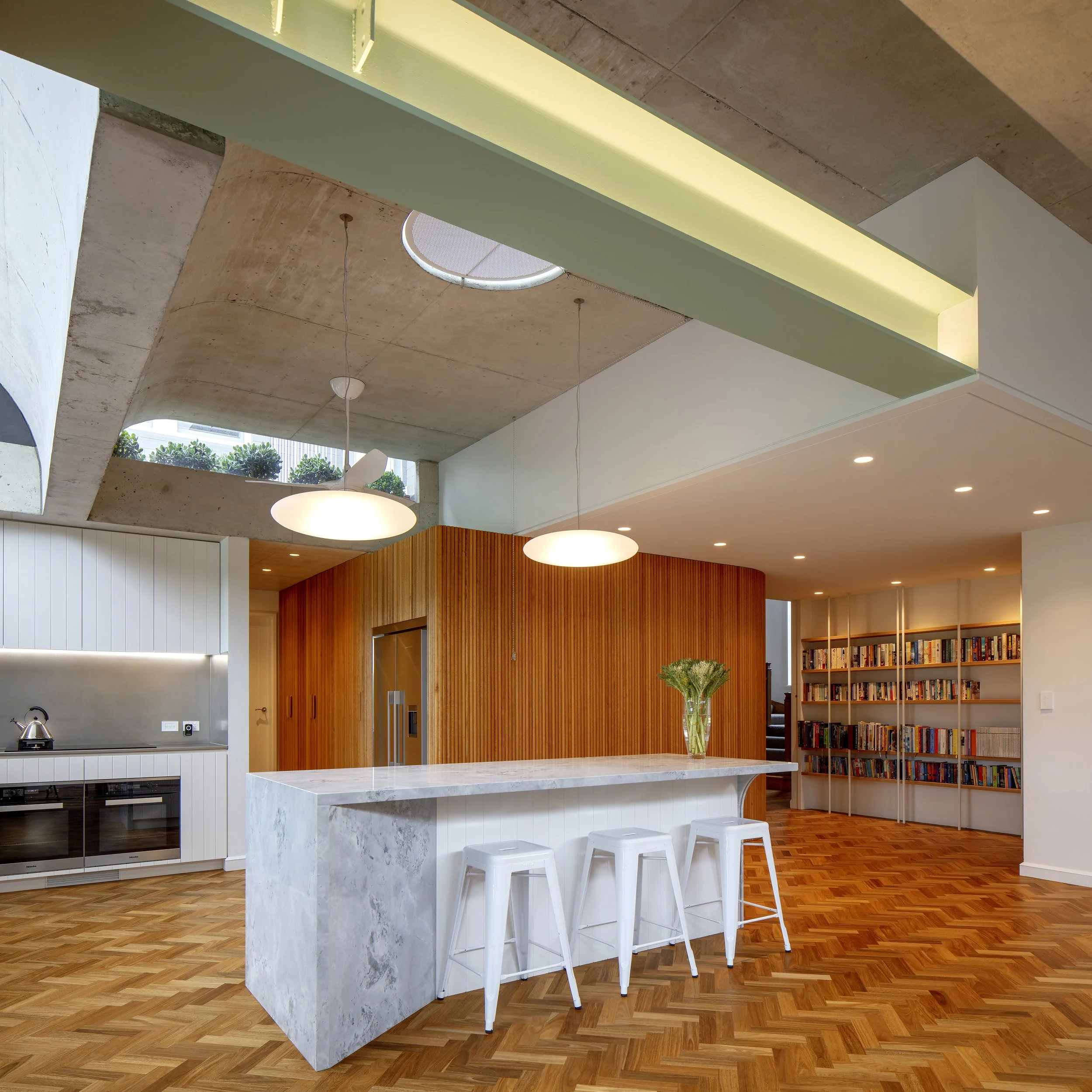
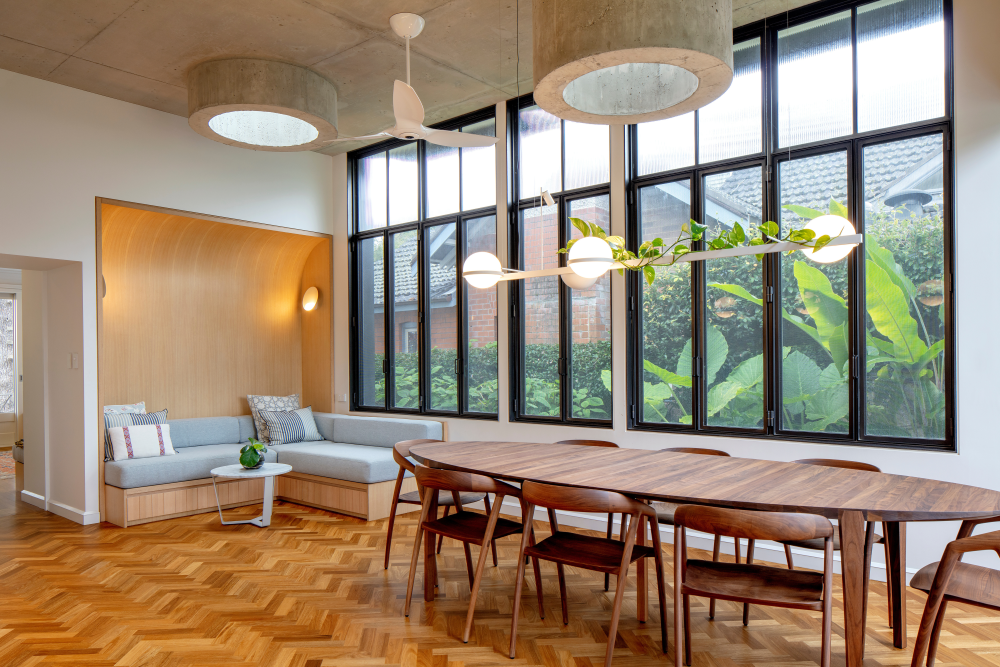
The renovation involved replacing the rear living area with a robust concrete volume that complements the original Arts and Crafts architecture while introducing a distinctly contemporary language. The new structure is punctuated by round skylights and a carefully designed geometry of steel blades and concrete planes, which establish a rhythmic architectural experience throughout the space.
A curved timber-clad wall within this extension provides both visual softness and spatial separation. Its hidden door system offers acoustic control between the living and bedroom zones, allowing the home to function flexibly for entertaining and family life.
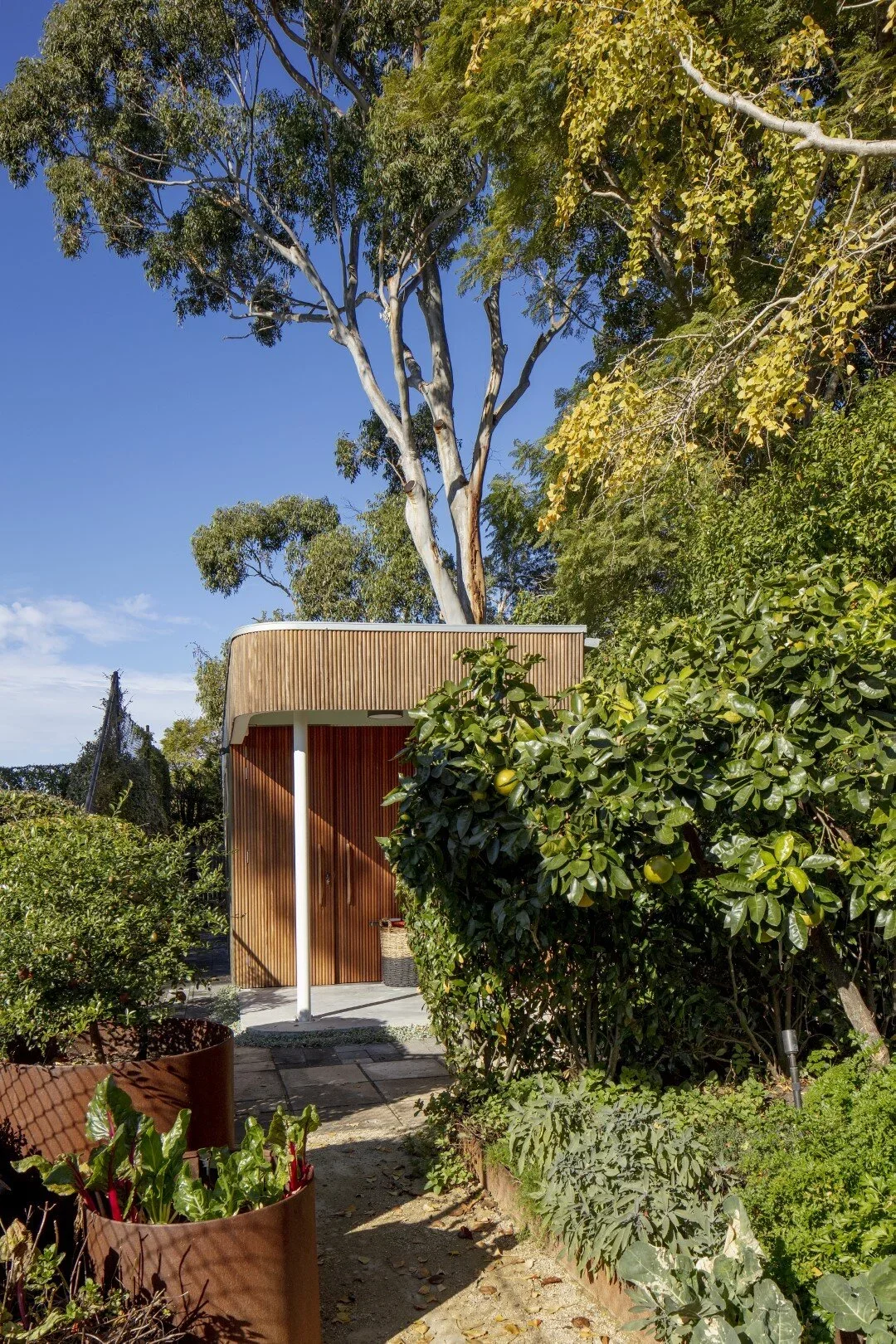
Further minor additions — including a sports room and storage adjacent to the rear tennis court — respond to site needs while reinforcing the architectural dialogue between old and new. These elements are resolved with consistency in detail and execution, demonstrating disciplined site coordination and construction sequencing.
Material Palette
Material choices throughout Roseville House are deliberate and layered, creating a dialogue between heritage and contemporary expression:
→ Concrete forms the primary structural language of the new extension, conveying solidity and permanence.
→ Steel elements (cantilevered carport and blades) articulate structure and framing with precision.
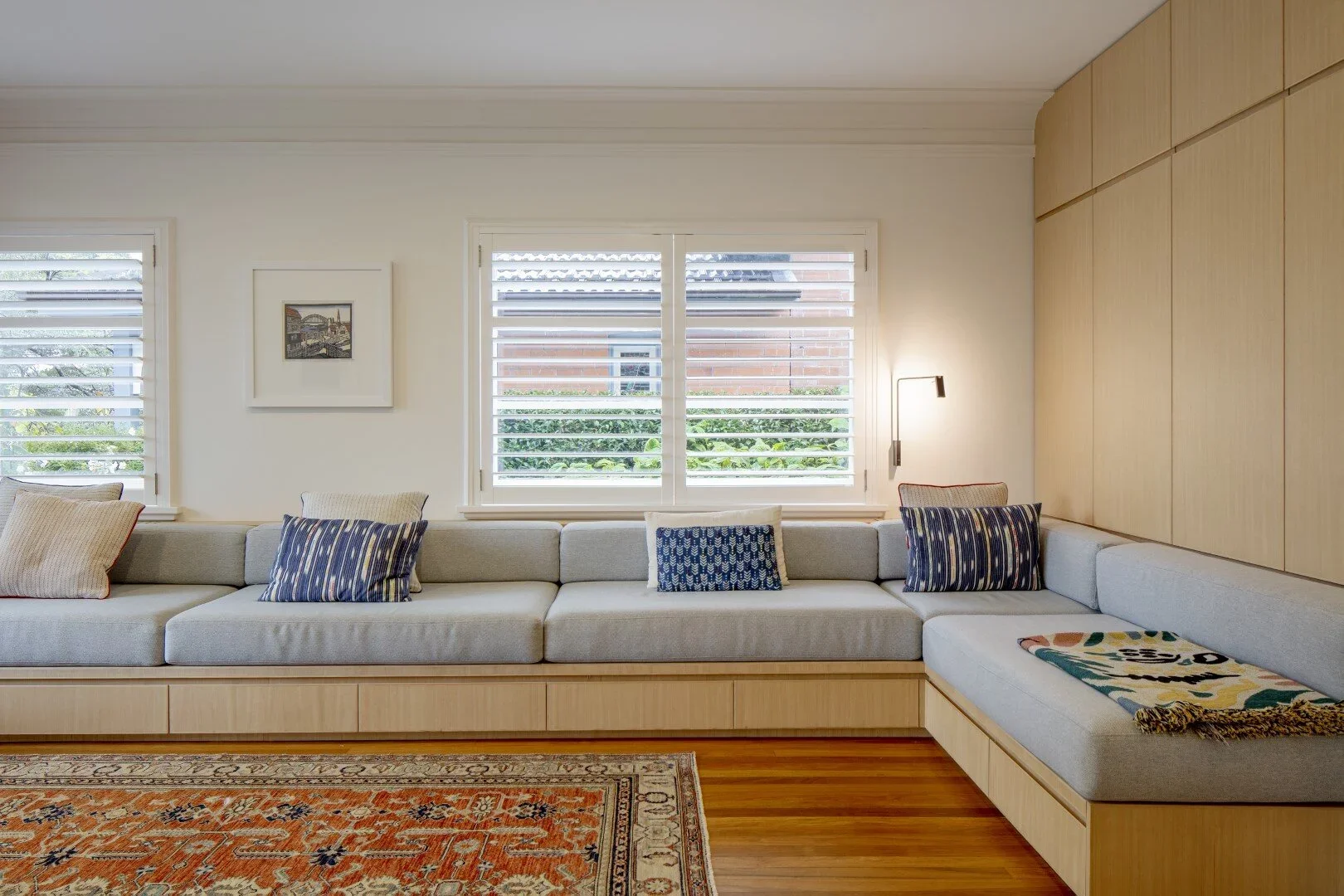
→ Curved timber cladding softens the new volume and introduces warmth, facilitating an ease of spatial transition.
→ Glazing and skylights bring controlled daylight deep into the plan, animating volume and surface.
The material are composed to balance contrast and continuity, reinforcing the architectural intent without overstating it.
Outcome
Roseville House has been transformed into a more comfortable, spatially resolved family home that recognises both its origins and its future. The introduction of a contemporary extension, articulated through concrete, steel and controlled daylight, creates a seamless relationship between old and new. The home now supports a broader range of family living, social gathering and everyday use — all while maintaining the charm of the original Arts and Crafts dwelling.
The project was recognised in the industry as a Finalist in the HIA-CSR NSW Housing and Kitchen & Bathroom Awards 2022 (Renovation over $1.5M), underscoring its thoughtful architectural resolution and execution within a competitive renovation category.